
Band: Massive Attack
Album: Mezzanine
Why Rolling Stone gets it right: Though not quite as innovative as their debut Mezzanine is Massive Attack’s best album and a high point for electronic music in the 90s.
Why Rolling Stone gets it wrong: By the time it came out Portishead, Tricky and a host of 2nd-stringers had cluttered the playing field with releases heavily indebted to MA and time (or rather, the fickle music press) was beginning to pass them by.
Best song: "Teardrop" is probably the best MA track of all time.Halen classic.
Worst song: "Dissolved Girl," maybe?
Is it awesome?: Pretty much.
First things first, let’s be clear that "trip hop" is a meaningless term fabricated by the British music press to fulfill its’ longstanding fetish with inventing silly terms in order to divide music up into micro-genres that don’t really exist in the first place. It quickly devolved into a lazy catch-all for a wide variety of artists who may or may not have had anything to do with its’ original meaning. That isn’t too awful in and of itself – after all, the music press’ raison d’etre is finding new ways to make music sound exciting so people will buy it and the journalists will then get paid to write about it. What’s unfortunate is that in this case it made a handful of music innovators like Massive Attack, their Bristol compatriots and DJ Shadow look like purveyors of a cheap, gimmicky novelty, which they most certainly were not.
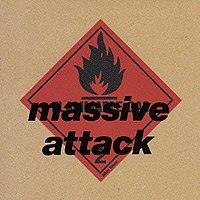
MA’s debut, "Blue Lines," stands alone in time – a jumble of soul and funk breakbeats and spaced club tunes, presided over by legendary roots reggae singer Horace Andy (solidifying the reggae/dub connection) and a rotating cast of divas, many of them, like Tracey Thorn of Everything But The Girl fame, renowned in their own right – all of it never rising above a languorous drift. That formula, which would be repeated to great success, was several years ahead of it’s time and I imagine at the time it sounded like nothing else. The strands are there for anyone interested to pull apart; the pulsing minimalism of acid house, dub’s negative space, the breakbeats from American hip hop, all informed by the avante-garde tendencies of Bristol post-punk O.G.s like The Pop Group (frontman Mark Stewart has collaborated with both MA and Tricky).
Parts of "Blue Lines" and "Protection," MA’s second album, sound dated today. "Mezzanine" doesn’t suffer from this nearly as much – nearly all of it still sounds reasonably fresh more than a decade on. The reggae influences are more subdued and thus better integrated with other elements. It’s an incredibly dense record (the Pitchfork review quite accurately describes it as "light-absorbing"), compressed, the beats pounding away over a sea of intricate studio touches and effects. In fact at times it threatens to collapse under its’ own weight. Fortunately by that time MA had really perfected their form and all that heaviness is mostly alleviated by their delicate touch and attention to detail.
One marked difference from their earlier work, and supposedly a great source of friction between band members, is the increased prominence of epic guitar riffs. "Teardrop", for example, sounds somewhat like an re-imagined inversion of the bombast of 80s arena rock. The vocals are, as ever, fantastic, like Horace Andy’s piercing falsetto soaring over and around "Man Next Door" (actually a remake of a reggae standard, penned by John Holt, that Andy recorded himself in the early 70s). The female vocalist is Liz Fraser from the Cocteau Twins, whose trademark indecipherable phrasing and haunting voice fit like a glove with the general sense of compression and paranoia.
It’s a shame that many people, in the US at least, probably associate Massive Attack if they even know who they are in the first place. "Mezzanine" isn’t as ground-breaking as their debut but is their most focused, resonant work. For lovers of soul, dub and hip hop alike.