Showing posts with label The Police. Show all posts

Wednesday, April 16, 2008

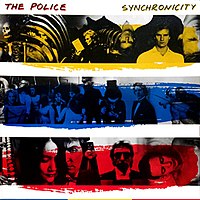
No. 455: Synchronicity


Band: The Police
Album: Synchronicity
Why Rolling Stone gets it right: The Police's best-selling album is similarly the band's best-known. It has a few hits and is emblematic of the band's end.
Why Rolling Stone gets it wrong: Like all things during this time period, there are too many synths on the record.
Best song: "Wrapped Around Your Finger" is great.
Worst song: "Synchronicity I" and "Synchronicity II" are both stinky.
Is it awesome?: Bah.

So... This album contains this song:


That video is kind of ridiculous and it kind of typifies the early 1980s. The zeitgeist appears to have been "Why wouldn't we have the guys in ridiculous costume?" I like that.

---

"Synchronicity" is the Police's best-known album and, of course, is the band's final album. It's a little self-indulgent -- hence the Jungian theme of the two (!) title tracks -- but it also has the band's most creepy and famous track.

The travesty of "Every Breath You Take" is that it's been sampled by Puffy and misinterpreted by many, many people. It's a creepy, creepy song, one based on Sting's divorce that other songs take lyrics from ("King of Pain" is the other big one).

The arrangements are the problem with these songs. The large majority of the songs have synthesizers on them. Despite being well-written songs -- "Wrapped Around Your Finger" being the operative one. The song is a wonderfully written love(ish) song covered by many, sans synthesizers. It's awesome, but the Police version is much worse.

That's the final album's problems. Sting decided he was more than a singer. He got so self-indulgent. That's a problem.

Tuesday, April 1, 2008

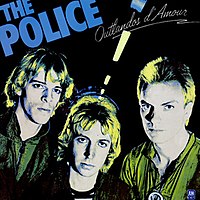
No. 434: Outlandos d’Amour


Band: The Police
Album: Outlandos d’Amour
Why Rolling Stone gets it right: The Police's debut album is arguably the band's best, with high-energy songs from the first note to the final one. Despite controversy surrounding the album's two singles, the album was a huge hit and remains a classic.
Why Rolling Stone gets it wrong: Energy doesn't equal great songs, necessarily. The low spots are low and the band sounds as young as it was.
Best song: It's a tough call, as "Roxanne," "Can't Stand Losing You" and "Next to You" are all classics. Personally, I'd go with "So Lonely," the band's earliest messing of reggae and punk rock.
Worst song: "Born in the 50's" isn't great.
Is it awesome?: Absolutely.

From the department of "useless facts about Ross": I think Sting's and my falsetto are within the same range. "Roxanne" is the only song in the unstoppably great video game "Rock Band" which I can consistently get 100% on the vocals. Noel Gallagher's vocal range is similar to mine (limited as that may be), but I've never scored 100% on an Oasis song in the game.

---

In the late 1970s, the Police were one of the bands that crossed between punk/new wave and pop. They did so remarkably well, actually, as the band was just punk enough to attract the mohawked crowd and just catchy enough to attract the mainstream crowd.

"Outlandos d’Amour" has tons of hooks, for sure. Sting's nasal voice fits the music perfectly, even when he's singing about prostitutes or suicide.

In fact, those two singles -- "Roxanne" and "Can't Stand Losing You" -- earned the band some controversy in England. The lyrics of "Roxanne," of course, go straight to the point, as the words "red light" are all over the song. "Can't Stand Losing You" lays out suicide only once (the final verse: "But you'll be sorry when I'm dead/And all this guilt will be on your head/I guess you'd call it suicide/But I'm too full to swallow my pride"), but the, uh, cover of the single attracted some talk:


---

The album isn't just those two singles, though they are both wonderful. "Truth Hits Everybody" has Andy Summers and Stewart Copeland singing perfect backup old-time backup vocals over a punk rock thrash. "Next To You" is a high octane romp with Copeland showing off his considerable chops. "Peanuts" is sporadic, but fun. "Hole in My Life" has the classic reggae tinge, a signature of the band.

"So Lonely" is the highlight of the album. Slightly slow with an awesome reggae beat, the song features some of Sting's best harmonies with Copeland and Summer. It also has a simple lyric inflected with Marley-esque tone, as Sting explained in 2000:

People thrashing out three chords didn't really interest us musically. Reggae was accepted in punk circles and musically more sophisticated, and we could play it, so we veered off in that direction. I mean let's be honest here, 'So Lonely' was unabashedly culled from 'No Woman No Cry' by Bob Marley. Same chorus. What we invented was this thing of going back and forth between thrash punk and reggae. That was the little niche we created for ourselves


The album isn't perfect. "Born in the 50's" is a turd and the spoken word nonsense of "Be My Girl - Sally" is terrible.

Still, the album is the band's best. Full of piss, vinegar and energy, it was a shape of things to come.
Friday, February 15, 2008

No. 369: Regatta de Blanc


Band: The Police
Album: Regatta de Blanc
Why Rolling Stone gets it right: The Police's second album shows the band moving towards the band's reggae love. Fueled by Sting's dub-style bass and Stewart Copeland's drum skill, "Reggatta" moved the band forward quite a bit.
Why Rolling Stone gets it wrong: The album isn't particularly strong outside of the two singles. The band's departure from its punk roots didn't really work as well as it probably should have.
Best song: "Walking on the Moon" is probably the band's strongest nod towards reggae and one of their best tracks.
Worst song: "No Time This Time" isn't great.
Is it awesome?: Eh. The band's first and final records are the best.

The Police sit somewhere between punk rock and pop rock. There's something incredibly interesting about this to me. The band appeals to both the subculture and the main culture. Straddling this line is basically punching a band's ticket to big record sales.

As the record's title suggests, this is white guys trying reggae. At times, it's much more effective than one would expect. The singles are fantastic, as "Message in a Bottle" takes the punk speed and accents it with Andy Summers' guitar line. Similarly, Sting's easy narrative of a man on an island is tried and true.

"Walking on the Moon" takes a larger risk in slowing down the tempo more than the band had ever tried. Maybe the band's closest tie to full-blown dub, the song was written in the same way "Yesterday" was. According to our good friend Wikipedia, Sting was drunk and was singing "Walking round the room" to himself, but realized that would be a silly title for a song.

The rest of the record is satisfiable, though not great. The title track, at points, appears to steal from previous songs (the bassline, for example, mirrors "Can't Stand Losing You"). "The Bed's Too Big Without You," even at four minutes, sounds longer than it probably should be, due to a misguided slowed down drum line.

The Police's non-single tracks aren't always great, but the singles are always fantastic. This record shows that quite well.

Monday, January 14, 2008

No. 322: Ghost in the Machine


Band: The Police
Album: Ghost in the Machine
Why Rolling Stone gets it right: The Police's brand of reggae-infused rock reached its commercial plateau with "Ghost in the Machine," as Sting's pop sensibilities took over. The addition of larger production values made for different styles, as the band strode away from punk rock.
Why Rolling Stone gets it wrong: The album is the beginning of the end as Andy Summers found himself being used less in the writing process. The band's rawness -- a defining and good trait -- began to fade away with this album. Needless to say, it sounds overproduced.
Best song: "Every Little Thing She Does Is Magic" is a wonderful love song.
Worst song: Andy Summers, you shouldn't be writing much. "Ωmegaman" proves that.
Is it awesome?: Not really.

Feeling locked out of the process, Police guitarist Andy Summers had problems with "Ghost in the Machine."

I have to say I was getting disappointed with the musical direction around the time of Ghost in the Machine. With the horns and synth coming in, the fantastic raw-trio feel—all the really creative and dynamic stuff—was being lost. We were ending up backing a singer doing his pop songs."


As a fan, I can't disagree. The horns and the synths and the production just feels silly to me. "Every Little Thing She Does Is Magic" is the album highlight, but even it is overly layered and sounds like the decade from which it came.

The album is filled with such juxtapositions. Sting and Co. wrote tons of great songs, but as the decade tended to do to its great songs, the production hurt the records. "Invisible Sun" has been covered by tons of bands and it's wonderful stripped of the synths. "Secret Journey," while silly lyrically, is romping good song when you take away all the sturm und drang.

The first and Police records are brilliant, but once Sting decided he wanted to stop being a New Wave dude and become a man of the '80s, the band suffered.