Thursday, August 9, 2007

No. 98: This Year's Model


Band: Elvis Costello and the Attractions
Album: This Year's Model
Why Rolling Stone gets it right: Elvis Costello's new wave nerdish punk rock is honed best on "This Year's Model." His quasi-soulful stuffed-nose vocals fall over organ and guitar based grooves. His Buddy Holly looks and classic rock pseudonym brought a new New Wave over to the States.
Why Rolling Stone gets it wrong: A lot of serious Costello fans find "This Year's Model" to be overrated and not his best. My own feeling is that Costello is wholly overrated. Still, he probably deserves a record in the top 100 (there are far less deserving records in there) and 98 isn't a bad choice.
Best song: "Radio Radio" is a great indictment of the recording industry and "(I Don't Want to Go to) Chelsea" is probably the best pre-90s angular rock record.
Worst song: "Lipstick Vogue" isn't great.
Is it awesome?: Maybe a low level awesome?

Not that it matters (considering how long it took to get Black Sabbath in), but Elvis Costello and the Attractions are in the Rock and Roll Hall of Fame. I don't know why this is such a surprise to me. They went in the same year as The Police, The Clash and AC/DC.

---

Elvis Costello is probably known as much for his style as his music. The glasses, the jackets. In the same way the Sex Pistols defined the way punk looked for the late '70s, Costello defined the way New Wave looked in the early '80s.

But, what of the music? Costello's nasal crooning takes as much from Burt Bacharach (who he later collaborated with) as it does from the other New Wave artists of the time. "This Year's Model" takes a lot from the punk spirit and musical trends, as well. "(I Don't Want to Go to) Chelsea," "The Beat" and "Night Rally" all work the punk style while keeping Costello's signature pub rock ethos.

Unlike the more aggressive "My Aim Is True," Costello and the Attractions are more measured on "This Year's Model." In combining the fury of "My Aim is True" and the smartness of his later singles, Costello put together a better version of pub rock. No longer a reaction to progressive radio of the 70s, singles like "Radio Radio" showed that punkish New Wave could be smart, interesting and fun to listen to.

---

Again, I've never really gotten Costello, so I send you to two reviews of "This Year's Model." The first is from a Costello fan site, arguing that it's not his best work. The second is from Pitchfork (shut up), which gives it a perfect 10. From that Pitchfork review:

Perfectly balancing the raw energy of My Aim Is True with the more elegant pop songwriting that would come to characterize much of his later work, This Year's Model is not only Costello's best work, but one of the most distinctively brilliant albums ever to be released. For fans of rock music bursting with wit and character, it really just doesn't get any better than this.


Fitting for a Costello fan, but for me... Not so much. I didn't even know he was in the Rock and Roll Hall of Fame.

No. 97: The Freewheelin' Bob Dylan


Band: Bob Dylan
Album: The Freewheelin' Bob Dylan
Why Rolling Stone gets it right: At his protesting best, Dylan takes out the establishment on multiple tracks. In addition to the so-very-famous "Blowin' In The Wind," "Masters Of War," "Talking World War III Blues," "A Hard Rain's a-Gonna Fall" and "I Shall Be Free" all hit the powers that be.
Why Rolling Stone gets it wrong: A lot of melodies are lifted from traditional folk songs. The lyrics are great, but like all Dylan records, a lot of the songs could use a reworking.
Best song: "Masters Of War" is really quite excellent.
Worst song: I'm not a fan of "Bob Dylan's Dream."
Is it awesome?: It's pretty great.

Protest songs are difficult to pull off, so leave it to one of America's greatest songwriters to do it. "The Freewheelin' Bob Dylan" has little of Dylan doing any free wheeling, in fact, he appears pretty serious. That's good.

The record starts out with the classic civil rights anthem "Blowin' In The Wind" and doesn't really let up. "Masters of War" -- a direct hit at the military industrial complex that Dwight Eisenhower warned against in his exit 1961 speech -- brims with not-so-subtle fury. "A Hard Rain's a-Gonna Fall" sounds pretty prescient considering it was released right around the time of the Cuban Missile Crisis.

The non-protest songs are decent. "Girl from the North Country" is a nice little song and "Honey, Just Allow Me One More Chance" isn't terrible. Mostly, though, they're just filler to get to Dylan hitting "the man" again.

Still, it's Dylan. His voice is awful and his guitar playing -- melodies, again, lifted and interpreted from old folk songs most of the time -- isn't very good, either. Listening to Dylan's original against the Roots' cover of "Masters of War," for example provides an interesting contrast. The Roots clearly beat the hell out of the song while Dylan -- recorded 45 years ago, but still -- seems to sound bored, almost.

---

While I'm not as tired of Dylan as I was during the first three weeks of this exercise when Dylan popped up four times, I still have had about enough of him. "The Freewheelin' Bob Dylan" has some of his best protest music; It's the record where Dylan became "Bob Dylan: Songwriter." For that, it deserves its placement here, as much as I'm tired of Dylan.

Wednesday, August 8, 2007

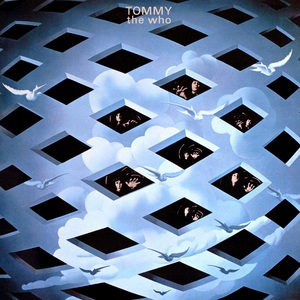
No. 96: Tommy


Band: The Who
Album: Tommy
Why Rolling Stone gets it right: "Tommy" is one of the first real rock operas and maybe the genre's most celebrated achievement. It's surprisingly dark -- themes include murdering a homewrecker, disability and child molestation -- but it's also sprawlingly beautiful. Unlike a lot of thematic albums, "Tommy" actually follows a more traditional theater pattern of having themes and overtures. It beats "The Wall" on that level, certainly.
Why Rolling Stone gets it wrong: It's dark. It's real dark. It was clearly influenced by drugs (Pinball? Really?) and possibly Townsend's own life experiences. It's sprawling beauty is sometimes just sprawling and tedious.
Best song: It'd be easy to say "Pinball Wizard" as it was the only real single from the record, but the final song, "We're Not Gonna Take It" uses most of the themes in the piece and ties them together well. "1921" is a beautiful song, as well and fits the plot well.
Worst song: There isn't really a terrible song on the record.
Is it awesome?: Yes.

"See me. Feel me. Touch me. Heal me."

Pete Townsend's words -- sang by Roger Daltrey -- rang out over Bethel, New York in the morning of Saturday, August 16, 1969. As the sun was rising, the Who was finishing up "Tommy." It's among the most striking rock moments caught on film and it shows the simple power in the rock opera's message as it related to the '60s.

---

The Broadway version has won Tonies. The film version features marquee stars like Jack Nicholson and Ann-Margret. The live album versions (Isle of Wight and Leeds, specifically) are some of the best live recordings ever pressed.

The original, though, is nearly unstoppable. There's nary a bad song on there, structurally it's cohesive while still interesting and the actual plot is strange enough to keep a listener's attention. It's real strange, actually.

(It was 1969. There were a lot of drugs going around. So, having a plot where the main points involve a child molesting uncle, pinball, the "Acid Queen" and a deaf, dumb and blind protagonist.)

There's an inevitable rock opera catch-22 that "Tommy" experiences. The structure of a cohesive plot makes for a pointed listening experience. It's certainly a foray into a realm in which rock hadn't previously stomped about. Rock operas, at the time, were a relatively new concept, certainly on this level.

On the other hand, Townsend's adherence to the opera style keeps (almost) all the songs on a theme. Nearly every song pushes the plot forward in a way that just isn't radio friendly. Unlike a more conceptual rock opera like "The Wall," the songs on "Tommy" all have a serious storytelling element in them. So, "Christmas" sounds kind of silly outside of the context of the rest of the opera.

(Also, the record has some unfamiliar musical theater elements -- namely the "Overture" and "Underture" on the record. That's small potatoes, though.)

Does "Tommy" survive that? I'm not sure. I mentioned in my piece on "Who's Next," the Who were my favorite band before I discovered indie rock. So, "Tommy" is basically tattooed on my brain. I hear any single song and know the place in the plot of the song. "Pinball Wizard" was something of a single and continues to get played on classic rock radio, so maybe that's not as big a problem.

Still, it's "Tommy." There are some classic records and "Tommy" is one of them, certainly. It should be higher; This is one of the precursors to progressive rock and one of the landmark albums of the last 40 years.

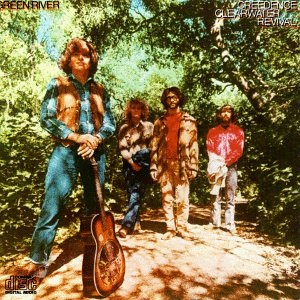
No. 95: Green River


Band: Creedence Clearwater Revival
Album: Green River
Why Rolling Stone gets it right: Using minimalist production techniques (a Steve Albini for the '60s [just kidding (sort of)]), John Forgerty made thinly veiled political songs sound peppy (the title track, "Bad Moon Rising" and "Wrote A Song For Everyone").
Why Rolling Stone gets it wrong: I am not the biggest CCR fan. I have some troubles with their Springsteen-esque co-opting of working class bayou culture, being that they're from El Cerrito, California.
Best song: It's hard to deny the wonderful poppiness of the title track and "Bad Moon Rising."
Worst song: "The Night Time Is The Right Time" is an awful cover of a good Ray Charles song.
Is it awesome?: Nope.

El Cerrito is 15 miles from San Francisco. It's not 15 miles from New Orleans. It's not 15 miles from Houston (home of Buffalo Bayou). It's fifteen miles from San Francisco.

So, this bayou nonsense is just that: Nonsense.

CCR, for the most part is a whole lot of radio-friendly nonsense, but it's hard to argue with a lot of their songs. They're damned catchy and the singles from "Green River" show that. The title track has a nice little guitar riff and "Bad Moon Rising" is catchy as hell.

I have to say, the cover of "The Night Time Is the Right Time" is absolutely terrible. It's got the backing bands shouting while Fogerty acts like he's a real singer. He's not Ray Charles and that song sounds nothing like the original version.

CCR is bubblegum nonsense, in a lot of ways. They're almost the picture of "band that boomers plug even though they're not really any good." That there are three (!) CCR albums on this list is ridiculous. A greatest hits collection would suffice, thank you very much.

Tuesday, August 7, 2007

No. 94: Bitches Brew


Band: Miles Davis
Album: Bitches Brew
Why Rolling Stone gets it right: The most rock-ish of all Miles' records, "Bitches Brew" (another double!) has a grand total of seven tracks -- six on the original vinyl. It's the beginning of what is now called fusion and it features some fantastic playing from Miles' band. Organ, guitar, etc. It's all amazing and outside the realm of "normal" (whatever that means) jazz.
Why Rolling Stone gets it wrong: I send you back to my piece on "Kind of Blue." I'm just not sure jazz belongs here completely.
Best song: "John McLaughlin" features some amazing guitar work.
Worst song: "Bitches Brew" is 27 minute long and any song that long shouldn't be that long.
Is it awesome?: I don't know. I was listening to it today and I enjoyed it.

Because most jazz is over my head, so I'll turn this over to my friend (and co-blogger at our baseball site) Alex Taft. He was my jazz director in college.

(Full disclosure: I asked him to make it quick, but he did not do that. Blame him.)

Bitches Brew is one of the first rock-jazz fusion albums, and is almost certainly the most influential rock-jazz fusion album ever. The album probably did more to spark the rock-jazz fusion wave of the 1970's and 1980's than any other album, which featured the best work of artists such as Herbie Hancock, Chick Corea (one of three keyboardists featured on the album), and Weather Report, among others.

The instrumentation on "Bitches Brew" was very unique, as it was more like a rock band than that of a jazz band. Rocky drum beats, electric guitars, distorted basses, electric pianos (in some cases two or three electric pianos), and multiple percussionists (sometimes two full drum sets in addition to auxiliary percussion like congas) were prominently featured. A bass clarinet and a soprano sax (played by jazz great Wayne Shorter) are the only other winds featured alongside Davis, and they are almost entirely absent from some charts, including "Miles Runs the Voodoo Down." While the vamps and beats were heavily influenced by rock, the melodies are what give this album its true fusion feel - Davis' improvisational melodies carry a dissonant, mysterious, and distinctly avante-garde-jazz-y tone throughout the whole album. The album's improvisational melodic method was hugely influenced by the John Coltrane "A Love Supreme" tradition, integrating free jazz-style "horizontal" rather than "vertical" cord changes - i.e., jams and cord changes improvised and decided on the fly rather than predetermined in a prewritten chart.

Not unlike what Jimi Hendrix was doing at the time with his guitar, Miles Davis began experimenting with different effects on his horn on "Bitches Brew," hooking up echo and reverb pedals to his horn (especially on "Spanish Key"), which created sounds the likes of which had never been heard before in recorded jazz. These effects in particular set the stage for Davis' other groundbreaking jazz-funk fusion albums that followed "Bitches Brew," 1970's "Live Evil," and 1972's "On the Corner," both of which heavily feature Davis using a wah pedal with his trumpet. Considering how the album drastically changed the Davis' style and voice for the rest of his career, it is no wonder that "Bitches Brew" is widely considered Davis' most revolutionary (though not nearly his most important) album.


So, there you have it. Taft likes it.

No. 93: Sign 'o' The Times


Band: Prince
Album: Sign 'o' The Times
Why Rolling Stone gets it right: Prince's most diverse record, "Sign 'o' The Times" was originally slated to be a triple (!) album. Some of the songs were taken from sessions in 1982 ("Strange Relationship" and "I Could Never Take the Place of Your Man"), while the record produced three top-ten hits (the title track, "U Got the Look" and "I Could Never Take the Place of Your Man").
Why Rolling Stone gets it wrong: There's a lot in there and it's hardly as danceable as his mid-80s stuff. Still, it's the second Prince record on here, and it fits in the mid-90s.
Best song: "U Got The Look" is classic Prince.
Worst song: Again, because I worship the sun, I don't like "The Cross."
Is it awesome?: It's borderline, but let's say yes.

"Sign 'o' The Times" is a double album originally slated to be a triple album. So, inevitably, you know my feelings on it. It's bloated, there are great songs on it and there is filler. Rinse, repeat.

What's striking about "Sign 'o' The Times" is the experimentation on it (Prince himself hated the term, saying "I hate the word experiment, "It sounds like something you didn't finish."). Several songs have little or no guitar, just sparse keyboard production and Prince's staccato vocals; The title track is the best example of that method gone well. As is Prince's way, he tries different lyrical topics, falling from "The Cross" (religion) to the zeitgeist title track to the big-time sensuality of "U Got The Look" to the ode to platonic love "If I Was Your Girlfriend."

Also, "Housequake."

If you've not heard "Housequake," I can sum it up for you: Prince trying to be James Brown. In it, Prince swears (a lot), something James never really did. And the lyrics sound a lot more like a Parliament song than ("There's a brand new groove going round/In your funky town/And the kick drum is the fault/You gotta rock this mother") anything about "Hot Pants" or feeling good.

Still, the start/stop rhythms, the shouting peppering horns, the fierce bassline... It's straight up James Brown. And you know something, Prince does it strikingly well. His "ow"s and "eee"s aren't James' (whose are, though?), but he seems at home rocking the genre as much as James used to.

---

Is "Sign 'o' The Times" on par with "The Wall" or the White Album? No, but it's a different animal. Prince is weird; There's no way around it. And "Sign 'o' The Times" is pretty weird. That doesn't make it bad. It's just weird.

Monday, August 6, 2007

No. 92: 20 Golden Greats


Band: Buddy Holly And the Crickets
Album: 20 Golden Greats
Why Rolling Stone gets it right: Old rock and roll is relatively unrepresented on the list and Buddy Holly is one of the big ones. Though he's probably remembered as much for his death as he was for his music.
Why Rolling Stone gets it wrong: It sounds dated. There's really no way to get around it; These songs sound like the '50s. The arrangements are thin, the themese are kind of dumb and the squeaky clean vocals don't sound modern.
Best song: "Not Fade Away, ""Rave On" and "That'll Be The Day" are all classics.
Worst song: That anyone covers "Bo Diddley" (the song, not the artist) is blasphemy.
Is it awesome?: I'd say no.

We love potential in the U.S. The NFL draft is among the most boring six hours on television (it's a guy reading names, for Christ's sake!), but it always gets ratings.

Really, though, who knows? Potential is nice, but it doesn't mean anything, really. There are tons and tons of bands who have one or two decent singles, but fade into oblivion.

Buddy Holly died at age 22, which means he had some tremendous potential. He had no big hits, but certainly made a few good records, but he didn't have the great tracks like Little Richard or the early Elvis records.

Maybe because his glasses became a mainstay fashion accessory for emo kids in the past 10-15 years (emo glorified nerdiness, on some level), but there's a real nerdiness that's hard to get around with these records. There's a certain "squareness" to these records; They're not soulful and they're not particularly rocking. Even "Rave On" isn't exactly a sock hop.

--

A few years ago, Rolling Stone put out a top 100 list of artists ("The Immortals," it was called), and Buddy Holly was listed on it at no. 13. John Mellencamp, I think, explains why Holly's music doesn't ring true with me.

Buddy Holly was one of the first great singer-songwriters -- he wrote his own material and in the end was producing it, too. He came from such a rural area and was able to speak to so many people in so many locations.


(Emphasis is mine.)

Maybe because I just don't know rural America, I just don't identify with Buddy Holly. Clearly, Mellencamp does, and, like it or not, Mellencamp is a very important person in music.

No. 91: Goodbye Yellow Brick Road


Band: Elton John
Album: Goodbye Yellow Brick Road
Why Rolling Stone gets it right: Containing four of his best songs, "Goodbye Yellow Brick Road" is Elton John's opus. John ferries between genres, even hitting reggae in "Jamaica Jerk-Off" (no, it doesn't work). His facetiousness comes through in "This Song Has No Title" and his sincerity is on display with "Candle In The Wind."
Why Rolling Stone gets it wrong: Say it with me... Double albums are packed with filler. One disc of "Goodbye Yellow Brick Road" would be plenty, but 2/3 of the second disc stinks.
Best song: The title track is among his best work. The 11 minute opus "Funeral for a Friend/Love Lies Bleeding" is fantastic.
Worst song: "Social Disease" stinks.
Is it awesome?: Actually, it might be if it was only one disc.

Reginald Dwight is the father of modern piano rock like no one else. In the place of guitar-based rock, Elton John took from Little Richard in order to achieve a fuller rock sound. The piano normally doesn't work with rock music; Elton John, in the '70s, showed that it could.

--

Before it came out, Elton John compared "Goodbye Yellow Brick Road" to the White Album. I don't know if he was trying to be obnoxious, but it certainly came off that way. The only things that this album and "The Beatles" have in common is that they're both doubles.

Still,"Goodbye Yellow Brick Road" is a nice contrast to anything Billy Joel has ever done. The two artists are always lumped together and I'd disagree. Elton John makes rock and roll records. Admittedly, they're not hard, but they're rock and roll. "Goodbye Yellow Brick Road" lacks the musical showtuney-ness of every Billy Joel record, basically. Yes, Elton John is a tremendous showman (the glasses, the shows, the wigs, etc.), but his music is pretty straightforward.

And when it's not, it's still much better than anything Joel has ever done. "Funeral for a Friend/Love Lies Bleeding" is a Meat Loaf-ish epic duel number is mostly tied in the second half's rock-ness.

Of course, the most famous two songs on the albums are slow piano numbers. "Candle In The Wind" is a lyrical mess, being that it's a tribute to Marilyn Monroe (which is nice, but who cares?). Still, if you don't listen to the lyrics, you'll enjoy the song. The title track, on the other hand, is probably the best song on the album. A ballad about a young artist's disenchantment with the so-called "Emerald City" of his dreams. It's an achingly sad piece, but it's wonderful and probably the best vocal performance that Elton John ever put to tape.

And, of course, there's the satire that is "Bennie And The Jets." Openly mocking glam rock (and on some level, himself), Bernie Taupin and Elton John piped in audience whoops and hollers to simulate the ridiculous of rock concerts at the time.

Friday, August 3, 2007

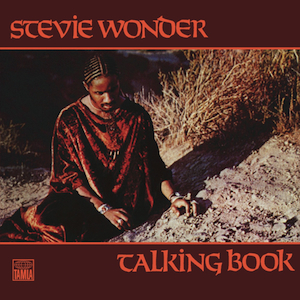
No. 90: Talking Book


Band: Stevie Wonder
Album: Talking Book
Why Rolling Stone gets it right: "Talking Book" is probably Stevie Wonder's funkiest record. "Maybe Your Baby," "Big Brother," "Tuesday Heartbreak" and "Superstition" are probably his funkiest songs. The record also features "I Believe (When I Fall in Love It Will Be Forever)" and "You Are the Sunshine of My Life" are among his best love songs.
Why Rolling Stone gets it wrong: I'm OK with this ranking.
Best song: "Superstition," probably. "You've Got It Bad Girl" is also fantastic.
Worst song: I'm not sure there's really a terrible song. "Blame It On The Sun" starts off slow, but is still a really great song.
Is it awesome?: Absolutely.

Let's talk about keyboards for a minute. In addition to the normal piano, a rock musician in the early '70s had his or her pick of several electrified keyboards. There was the ARP keyboard and the Moog, both the first real electronic sounding keyboards. There's the Fender Rhodes (basically, a honky tonk piano sound). There was, of course, the clavinet.

Stevie Wonder used all of them on "Talking Book." He used them instead of augmenting the record with strings. He used them in double overdubs. He used them for lead melodies. He put them through effects.

And boy, did the record come out well.

"Talking Book" spans the gamut from the bookend love songs -- "I Believe (When I Fall in Love It Will Be Forever)" and "You Are the Sunshine of My Life" -- to the charged political funk of "Big Brother" to the occult-y classic (now played every year on October 31) "Superstition."

Keyboards in rock and roll don't take center stage much and moreover, they don't sound like heavy effected guitar. The keyboards on "Talking Book" do. From the wah wah of "Superstition" to the slight chords on "You Are the Sunshine of My Life," it's hard to tell where the guitars end and the keyboards start. In fact, I still have trouble discerning which is which on "Blame It On The Sun."

The last of Wonder's great trilogy, "Talking Book" is amazing. It was one of the first R&B records that spans genre and really brought rock fans over.

No. 89: Dusty In Memphis


Band: Dusty Springfield
Album: Dusty In Memphis
Why Rolling Stone gets it right: Dusty Springfield's sultry voice, originally cast in pop music, gets better served with session players from the backing bands of Aretha Franklin and Otis Redding.
Why Rolling Stone gets it wrong: The album just isn't all that good. Save for a couple of tracks, the record is in the ether between pop and soul. Not in a good way.
Best song: I think it's pretty clear that "Son Of A Preacher Man" is the best song on the album.
Worst song: "The Windmills of Your Mind" isn't very good.
Is it awesome?: I'd say no.

Well, first off, Dusty Springfield was so overcome with fear in Memphis, she wasn't able to record her vocals properly. Legend has it that she was intimidated by the players in the band (who'd come from Aretha Franklin and Otis Redding records), so she had to overdub her vocals in New York.

So, the record isn't even really Dusty in Memphis. That stinks.

Overall, there are some decent songs, but the sappy strings that dot 3/4 of the album take a lot of the rawness out of the soul of Springfield's voice. The opening two tracks ("Just A Little Lovin'" and "So Much Love") are soaked in strings to the point of over saturation.

Of course, it's mostly wiped clean by the third track, easily the most identifiable from Dusty. "Son Of A Preacher Man" is a sexually frank song that really sounds sultry. Instead of the strings that occupy other tracks, the horns that accent Dusty's voice are much more, well, direct.

Sadly, the record falls downhill from there. It's mostly an amalgam of ballads and cheesy love songs. Not awesome, not the 89th best album of all-time.