Tuesday, May 20, 2008

No. 493: That's the Way of the World


Band: Earth, Wind & Fire
Album: That's the Way of the World
Why Rolling Stone gets it right: The best selling and best album from Earth, Wind and Fire features the group's famous harmonies and their signature funk sound.
Why Rolling Stone gets it wrong: Parts of the record get a little repetitive.
Best song: The first two tracks -- the title track and "Shining Star" -- are brilliant. Africano is also awesome.
Worst song: "All About Love" isn't great.
Is it awesome?: It's close.

Earth, Wind & Fire is perfectly pleasant. Again, because I'm a product of my time, EW&F has been a band good for three things:

  1. Dusty stations

  2. Advertisements for older people

  3. Hip hop samples


I guess I could add "background music" to that list after living with "That's the Way of the World" for two days. It's a perfectly fine album, it's just not memorable after the first two tracks. Certainly, the title track and "Shining Star" are amazing songs, but the album is just good enough after those two. "Happy Feelin'" is a more upbeat number, but has the same harmonized vocal style that came to be the band's trademark. "Yearnin' Learnin'" is a Stevie Wonder knockoff, though a good one. The instrumental Afrocentrism on "Africano" starts off with a nice little flute.

It's the type of album we should all have, but it's largely forgettable if you're not a fan already.

Monday, May 19, 2008

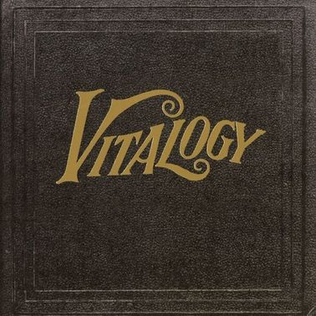
No. 492: Vitalogy


Band: Pearl Jam
Album: Vitalogy
Why Rolling Stone gets it right: Delayed by the band's fight with Ticketmaster, "Vitalogy" was recorded mostly as the band toured the country. Problems within the band created a strange dynamic and some eclectic stuff.
Why Rolling Stone gets it wrong: Pearl Jam is still Pearl Jam. It's not great music.
Best song: "Nothingman" isn't bad.
Worst song: Bah. "Corduroy" stinks.
Is it awesome?: Nope.

Bands that are on this list, but without their best effort on the list:

1. Pearl Jam

That is all.

(Honestly, is Pearl Jam the only band without its best album on the list? I guess you could argue one of the early Soundgarden records, but I'd still go with "Superunknown." Maybe someone could claim "Chocolate City?" I don't know. "Vs." is the superior of the Pearl Jame records.)

---

Here's another question: Is Pearl Jame the most misrepresented band of its era? There's a feeling that Pearl Jam had a "grunge" sound, which is nowhere near true. The band's distance from the Seattle sound is large, considering Pearl Jam's entire being is one of anthematic classic rock. Instead of taking influence from the hardcore and punk bands of the '80s -- as Nirvana, Alice in Chains and Soundgarden did -- Pearl Jam took influence from Neil Young and the Who.

Similarly, Vitalogy is Pearl Jam's more "punk" record, though that's a very relative concept. "Spin the Black Circle" is the analog-as-savior song, built on a high octane riff. "Not for You" and "Corduroy" is are classic Pearl Jam songs, all dirge and whine. The band branches off into the eclectic zone on a couple of tracks, trying to be Tom Waits on "Bugs" and a sonic scrap band on "Hey Foxymophandlemama, That's Me." Save for the weirder songs, the album is simply another Pearl Jam record. The songs run together and are entirely forgettable.

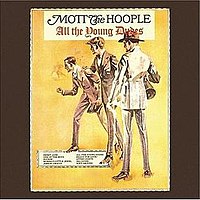
No. 491: All the Young Dudes


Band: Mott the Hoople
Album: All the Young Dudes
Why Rolling Stone gets it right: At the brink of breaking up due to shiftless sales, Mott the Hoople decided to take a decent cover and a David Bowie song and build an album around them. This is the result.
Why Rolling Stone gets it wrong: Save for those two songs, the album is forgettable.
Best song: Title track. No question.
Worst song: "One of the Boys" stinks.
Is it awesome?: Nope.

Is Mott the Hoople the worst band on the RS 500 list? My first thought is yes, but upon further reflection, Mott isn't the worst thing in the world. The worst artists on the list remain Meat Loaf or Quicksilver Messenger Service (of course, outside of U2 and Springsteen).

Still, "All the Young Dudes" is the second album on this list from the band, on top of six Bowie albums. Mott the Hoople were, essentially, Bowie proteges, and this album has the band's biggest hit. Written originally by Bowie for Mott, the album's title track wasn't even Bowie's first choice to give to the band. In fact, the band rejected the original choice, "Suffragette City" and opted for "All the Young Dudes" instead. Bowie, of course, sang backup on the record and the rest is sorta history.

The song is often misinterpreted as a positive song, though it's mostly about things like suicide, teenage rebellion and the apocalypse. The song dismisses the Beatles and Rolling Stones as, essentially, old people's music while lauding T. Rex. Certainly, an odd choice.

Still, like "Cherub Rock," the song's message is not what makes it fun. Bowie's skill at crafting a melody is evident by the singalong chorus. The song makes for a wonderful singalong -- it's easy to see 30 people crooning along to "carry the news."

But, you know, one song does not an album make. End of the list or not, this record shouldn't really be here.

Friday, May 16, 2008

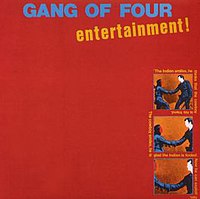
No. 490: Entertainment!


Band: Gang of Four
Album: Entertainment!
Why Rolling Stone gets it right: Sitting in a place with the Modern Lovers, Television and other such post-punk bands, Gang of Four's debut is a wonderful amalgam of the dominant music of the 1970s, filtered through an intelligence unforeseen until the record's release.
Why Rolling Stone gets it wrong: I guess I could see why some people don't like it, but that's not easy. More importantly, this album is far too low considering the music that followed it.
Best song: "Ether," "Return the Gift" and "Guns Before Butter" are all great.
Worst song: I don't love "Contract."
Is it awesome?: Yes.

Scores of words have been spilled on "Entertainment!" by writers far more talented than I. Robert Christgau says of the record "No matter how merely liberal their merely critical verbal content, the tension/release dynamics are praxis at its most dialectical."

The greatest bands were able to fuse forms while still maintaining a melody and catchy ethos. Gang of Four do this in spades. Each song is danceable in the same way current bands like The Rapture are catchy. It's the kind of catchy that won't get you on the radio -- Go4 never really got on the radio -- but it is the kind of catchy that could get you in an iPod ad or over credits on an episode of "Bones." As Jess Harvell of Pitchfork said in a review of the album, "They had attitude, energy, the big beat, skilled players funneling their virtuosity into the necessary notes, a handy way with a catch phrase, and sweaty live performances. Sounds like pop to me."

And that's how the record sounds. While Public Image Ltd. did a similar thing, their music was harder on the ears. Andy Gill's razorblade guitar on "Not Great Men" is rhythmic and fun, while the chorus is fun. Each is, indeed, a hook. It's the type of thing a listener hums soon after and never forgets.

Yes, catchiness/pop sensibility isn't the only thing important to a band, but songs with no hooks are the ones most forgotten. I recently got two albums by two of my favorite bands; both are bands known for considerable hooks. The first -- Death Cab for Cutie's latest -- is entirely forgettable. That's too bad, because DCFC is a favorite of mine, but they're fallen into a trap of boredom. So it goes.

The other album is Nine Inch Nails' latest, "The Slip." The record is much more hook-heavy and fun. Like Go4 -- from who Reznor has taken great influence -- the album is danceable, yet still maintains a line of heaviness.

Go4's ethos is much more punk rock and much more political (not to mention smarter) than NIN. "Damaged Goods" builds to a dance-rock fury while the Marxism "Guns Before Butter" is better than anything Rage Against the Machine ever released (not mention its around-the-world drumline. "Ether" stands along any great rock of the past 30 years and "5.45" bemoans the media and industrial life we live in, while utilizing the simplest of intros. Sounding like a better version of Fugazi, the album's message is clearer than its peers.

It's sad, really. Go4 was so ahead of its time, it's a shame the band never achieved the heights Fugazi did. Still, "Entertainment!" holds up so much later as a testament to their genius.

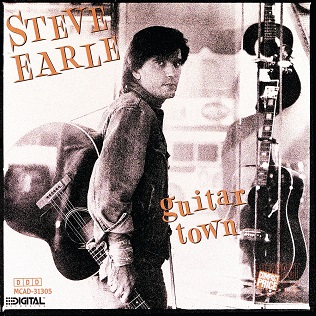
No. 489: Guitar Town


Band: Steve Earle
Album: Guitar Town
Why Rolling Stone gets it right: Steve Earle was one of the earlier pioneers of alt country and his debut album still sits near the top of the genre's esteem. In 2006, it was ranked 27th on CMT's 40 Greatest Albums in Country Music.
Why Rolling Stone gets it wrong: I am not a country music fan, nor a fan of 1980s production techniques. "Guitar Town" has both.
Best song: The title track isn't bad.
Worst song: "Down the Road" stinks.
Is it awesome?: Nah.

Again, let me first preface all I'm about to write by saying that I am woefully ignorant in the ways of country music. Certainly due to a classist bent, I was always under the impression that country music was for hill people and poor whites.

(This stereotype has moved, if our entertainment is correct, onto 1980s metal and the Chevy Camaro.)

So... I experienced much in the way of country music -- save for Johnny Cash and Richard Buckner (who is only country if you squint) -- until my college years when I was exposed to fellow Illinoisans Jay Farrar and Jeff Tweedy and the alt-country movement they helped spawn. Uncle Tupelo -- a band not on this list, by the way -- is always going to be my starting point when these discussions arise.

This means my appreciation for Steve Earle is minor. I know of him more from his "Jerusalem" album -- a record I reviewed for my college radio station -- than for this record.

"Guitar Town," to my ears, sounds a lot like the decade from which it spawned. It is the rock and roll of the time, with arrangements similar to Springsteen's. "Goodbye's All We've Got Left" has the same organ sound as "Glory Days" while "Someday" speaks of the blue collar blues evident on every Springsteen record.

The more country-sounding songs don't have any Springsteen in them, as "Hillbilly Blues" and "Think It Over" sound like something from a Hank Williams songbook (albeit overly produced). Neither is particularly good.

Earle's music certainly appeals to someone, but I prefer my country in the vein of Merle Haggard, Cash and Uncle Tupelo. This one is just too much a product of its time.

Thursday, May 15, 2008

No. 488: Voodoo


Band: D'Angelo
Album: Voodoo
Why Rolling Stone gets it right: I don't know enough about the Soulquarians to write about the whole of this album, but D'Angelo's thing is that he's a modern, slower Prince. "Unitled (How Does it Feel?)" is the grand example of this.
Why Rolling Stone gets it wrong: I actually think this should be higher.
Best song: "Playa Playa" and "Unitled (How Does it Feel?)" are wonderful.
Worst song: "Spanish Joint" isn't great.
Is it awesome?: Sure.

Ahmir "?uestlove" Thompson executive produced "Voodoo." This is a fact easily found not only by reading the album's liner notes or looking it up on our good friend Wikipedia, but also by listening to the record.

Thompson's hand is all over the album, with his downtempo drumming style absent from R&B and hip hop, save for the things he touches. The album's opening track

?uestlove was able to utilize what he called "human imperfections" in his drumming, turning off some (Lenny Kravitz was originally slated to appear on the album, but chose not to because he couldn't sing with the beats), but making for a cooler sound. the record is slightly Roots-esque, with "Playa Playa" sounding the most like a

Of course, D'Angelo's voice is the draw to the record. Sounding partially like a Prince cover singer, he lilts and moves through notes like a male Mariah Carey. "Chicken Grease" is a silly little song that features his entire range while "The Root" is soulful and great.

The guests are similarly good on the record. "Left & Right" is an odd sex song, considering the guests on the song are, um, Method Man and Redman. No offense to anyone who's had sex with either gentleman, but neither are exactly sexy.

Plus, of course, there is this:


A fine, fine record.

No. 487: Mellon Collie and the Infinite Sadness


Band: The Smashing Pumpkins
Album: Mellon Collie and the Infinite Sadness
Why Rolling Stone gets it right: If you listen to the throbbing mass of Pumpkin fandom, this album is "Sticky Fingers," "Dark Side of the Moon," "Revolver" and "The Wall" all rolled into one. This, of course, is nonsense. MCIS is a picture of ego, though I'd suggest that ego isn't the worst thing in the world. The album has its highlights but is not some epic masterpiece.
Why Rolling Stone gets it wrong: See above.
Best song: "Zero" has a great riff, but is lyrical nonsense.
Worst song: "Fuck You (An Ode to No One)" is dumb.
Is it awesome?: Not really, but it's better than I remembered.

"Alternative" is an odd term and one that lost, basically, all meaning during its run. By definition, it has to be the non-dominant form and, clearly, "alternative" was the dominant form of music for much of the 1990s. "Mellon Collie and the Infinite Sadness" was the height of pomposity for alternative music.

Like all double albums, the record bites off more than it can chew, but, MCIS is a wonderfully post-modern look at double albums. Taking elements from many of the classic double albums of the past, it reprocesses a lot of concepts record buys know and love. The goodbye/goodnight track reflects the White Album, the opening overture-type song is "Tommy"-esque, the concept of life and death reflects a non-double (but a classic concept album) in "Dark Side of the Moon" and the nihilism often played out in the lyrics reflects "The Wall." In fact, Corgan himself called the record "The Wall for Generation X."

In short, MCIS is, like "The Simpsons," a reflection of much of what has been stuck in our heads as music buyers.

---

With that said, let me lay out some of my feelings in a single paragraph, as I did in an e-mail to some friends last year:

I have to say, I like "Siamese Dream" some (specifically, the singles), but the masturbatory nature of Billy Corgan's writing just bugs the hell out of me. I specifically mention "Zero" as his last good composition largely because I only like that song and "Bullet with Butterfly Wings" as decent tracks from the disaster that is "Mellon Collie." It's a double album (almost always a mistake, as double album=lots of filler), but it also has the wannabe nostalgia of "1979" and the symphonic nonsense/whinefest that is "Tonight, Tonight."


The piece on this project that garnered the most on-topic comments is "Siamese Dream," which entirely proves my point that Smashing Pumpkins fans worship the band to a larger degree than most bands. To sum up, I once wrote a column calling the fans of certain bands 'fanboys' and mocked them for it. The bands were Nine Inch Nails, Tool, Radiohead and Smashing Pumpkins. When I wrote said column in college, I got tons of hate mail -- more than I'd ever received.

The funny thing, of course, is that I praised "Siamese Dream." Despite it being an arena-rock record, it has ridiculously good hooks, including a song I diametrically oppose (lyrically), but love to sing.

Smashing Pumpkins, at this point, is mostly in the past. No one claims that Billy Corgan -- well, I'm sure someone does, but I don't want to meet this fictional person -- is currently making good music. The band's best work is clearly "Siamese Dream" (though some would say MCIS is the band's best work) and "Siamese Dream" was released 15 years ago.

But, like a lot of artists who still exist in the past -- despite dragging a rotting a corpse of a back catalog around -- the Pumpkins have their defenders. It's tough to criticize their top work without getting hit by the fanboys and fangirls. Criticizing their bald genius is akin to stomping on these morons' collective foot.

And maybe I do hold Corgan's most self-indulgent moments against his better work. MCIS isn't the worst thing I've ever heard, to be honest, and there are decent songs on it. It raises a pretty simple question: How much should we hold our annoyance from an artist against said artist's work? How much should our separate the people from the music?

It's difficult, certainly. Billy Corgan annoys the hell out of me and his fans are even worse. His conceit that he's the greatest songwriter in this planet's history makes me want to punch him in the head. That his fans suck it up bugs me even more. They act like he's a great producer when all he's ever really done is -- gasp! -- hook up a flanger and Superfuzz and layer guitars. Oh my! I've never heard Jimmy Page, Jimi Hendrix, Kim Thayil and every other fucking guitar player -- save for Kurt Cobain -- do the same thing.

Also annoying is Corgan's whining voice. Sounding like someone with his nuts in a vice, Corgan's pitch is somewhere above a cat being slaughtered as he screamed "And I still believe that I cannot be saved" at the end of "Bullet With Butterfly Wings."

This is all without mentioning Corgan's obnoxious lyrics. His pseudo-nihilism is both annoying and rampant through the record. Two of the record's biggest singles -- "Zero" and "Bullet With Butterfly Wings" -- are almost nonsensical in their angst. "Fuck You (An Ode to No One)" is probably as much a nod toward Corgan's critics (Hello, Mr. Albini!) as it is inner monologue.

With all that said, MCIS isn't a terribly offensive record. Taken as a whole, it's bloated and annoying. The whole concept of Corgan trying to place the life cycle into an album makes me want to smash all my CDs. But, taken individually, the songs have their merits.

"Tonight, Tonight" is not as terrible as I remembered it last year. The CSO's strings are beautiful and actually work with Corgan's voice more than the band does. "Here is No Why" is pretty little riff and the duel fake Nietzschism of "Zero" and "Bullet With Butterfly Wings" is built on wonderful riffs. "1979" has cool samples and is a decidedly not-Pumpkins record.

Like all double albums, the record would be best-served to be cut down to one disc. There are about five or six good songs on the record and a whole lot of filler.

It bugs me to even remotely endorse this album, but there are some good songs on it.
Wednesday, May 14, 2008

No. 486: Maggot Brain


Band: Funkadelic
Album: Maggot Brain
Why Rolling Stone gets it right: Funkadelic's third album is a harder brand of funk than earlier records. Touching on classic 1970s themes -- empowerment, drugs, etc. -- the album is strong lyrically and darker musically.
Why Rolling Stone gets it wrong: Eddie Hazel's guitar is the signature of the record and it gets tedious.
Best song: "Hit It and Quit It" is great.
Worst song: The title track is way too long.
Is it awesome?: It's OK. I don't love it.

"Maggot Brain" is a wildly challenging album. Like many things George Clinton, it's pretty bizarre, but gone are the hits of previous Clinton-led work ("Atomic Dog," etc.) and left is a darker, more out-there record.

One needs to look no further than the opening title track to see this shift. The album opens with a 10 minute guitar solo. Sprawling and cool, "Maggot Brain" is a song that's not really a song. It's "Eruption" on heavy sedatives. The album's later tracks all carry guitarist Eddie Hazel's sound. His screaming wail dots the record.

It's a far musical cry from the Meters or Sly and the Family Stone, that's for sure. Lyrically, though, it works with similar themes. "You and Your Folks, Me and My Folks" is a song about unity among the poor. The song takes its refrain from a folk rhyme originally published in 1922. "Super Stupid" takes on the drug problem and takes influence from Jimi Hendrix. "Wars of Armageddon" is strange, long and fun. The lyrics are mostly about social power among the poor, as well as the politicians sending those to war.

It's not the records you know -- though you may know "Hit It and Quit It" -- but it is a good record. Worshipped by some, it takes a bit to resonate. But, when it does, look out.

No. 485: All Time Greatest Hits


Band: Loretta Lynn
Album: All Time Greatest Hits
Why Rolling Stone gets it right: One of country's biggest stars, Loretta Lynn's 2002 compilation is a one-stop shop for anyone learning to love her music. She sings of booze, men and jealousy with aplomb.
Why Rolling Stone gets it wrong: Maybe it's just my bias against country, but I could not get really into this record. It's pleasant enough, but it's not as good as the other country on this list, be it Haggard, Parton or Cash.
Best song: "You Ain't Woman Enough (To Take My Man)" is great.
Worst song: "Trouble in Paradise" isn't great.
Is it awesome?: Bad timing. I can't enjoy this as much as I should, due to recent listens to Merle Haggard.

Loretta Lynn is basically worshiped by Jack and Meg White of the White Stripes. It's understandable, as she's, clearly, a tough lady. Her songs don't fuck around. She will cut you if you cross her. In the grand country tradition, she has big hair and an even bigger voice.

"All Time Greatest Hits" is the definitive single-disc country compilation of Lynn's. An accomplished gospel singer, her grit is evident on the record. She threatens a potential interest in her man on "You Ain't Woman Enough (To Take My Man)," and the divide between two in "Louisiana Woman, Mississippi Man."

For a gospel singer, Lynn's amorous songs are a little striking, but fun nonetheless. "Out of My Head and Back in My Bed" and "Wine, Women and Song" and "One's on the Way" are such songs.

The music isn't entirely new and listening to this one directly after "Branded Man" is not good timing. It sounds less than Haggard's masterpiece, though that could just be my untrained-to-country ear. Nevertheless, a fun set.

Tuesday, May 13, 2008

No. 484: Branded Man


Band: Merle Haggard
Album: Branded Man
Why Rolling Stone gets it right: In the same way Johnny Cash was a romantic vigilante, Merle Haggard was a badass who could knock your ass to the floor. His introspective laments dot the album and his beautiful manvoice portray the lyrics perfectly.
Why Rolling Stone gets it wrong: It should probably higher, but this is a decent placement. The sound isn't wildly divergent, so I can see why people don't like it. It is a genre piece.
Best song: The title track is brilliant and "Gone Crazy" is an amazing uptempo number. "I Threw Away the Rose" is aching and pretty.
Worst song: I like every song on this record.
Is it awesome?: Yes.

You know, I've complained over and over about the lack of hip hop on this list, but where's the country music? I'm not a country fan, but the genre was one of rock and roll's most influential precursors. Yes, there is a little more country on the list, but country has had a longer lifespan. Save for Hank Williams and Johhny Cash, there isn't much country here.

Moreover, there's absolutely no modern country. None. Now, I'm woefully ignorant of this particular genre, but shouldn't Garth Brooks make an appearance here? Or Faith Hill? Or the Dixie Chicks? Or someone from that genre? Instead of 50 Dylan albums and every band that ever set foot in San Francisco in 1967?

---

Merle Haggard is a badass. Like Cash, Haggard came into country when the idea of a noble cowboy was giving in to the Leone-style mythos of the 1960s. Cowboys, for many, were more about badasses and gunslingers than the Roy Rogers of the world. Haggard's version of "Loneliness Is Eating Me Alive" is buttressed by the album's title track -- about being misaccused -- and the not very subtle "Don't Get Married," a song in which the protagonist is in prison and asks Julie to remain faithful. After all, "someday, I'll be free." Similarly, the album wraps up with "I Made the Prison Band."

Hell, even the love songs are salty. "Go Home" is the tragic love story of Maria, a Mexican woman, and the protagonist, presumably Haggard. Set against a slight mariachi guitar line, the song is a cool crossover and a wonderful lyric.

---

Haggard's voice is strong and manly. "Somewhere Between" features his and Bonnie Owens' wonderful vocals playing off one another. The album's instrumentation is straight-up country, with layered guitars, an upright bass and a slide working the melody. It's a perfectly pleasant listen and a great surprise. This one is a classic.