Showing posts sorted by date for query greatest hits. Sort by relevance Show all posts

Tuesday, June 10, 2008

Unlisted: We Have the Facts and We're Voting Yes

As I mentioned a couple of weeks ago, this site's future is still unwritten. I'm not doing another list, as the work is too much for me right now. With that said, I'm going to continue to post unlisted pieces and here is an album I adore from a band I'm ashamed to admit I love.


Band: Death Cab For Cutie
Album: We Have the Facts and We're Voting Yes
Why Rolling Stone gets it right: Well, Death Cab isn't a band that everyone knows, so I guess this album shouldn't be here. I imagine it's just a personal love of mine.
Why Rolling Stone gets it wrong: "We Have The Facts" is a wondrous romp through what appears to be an on-again/off-again relationship of hipsters in Seattle. Emotionally charged, the barbs fly ("For What Reason") while bitterness remains until the end of the album("Scientist Studies"). Musically, the perfect combination of emo-style vocal whining, angular Northwest guitars and four-piece production gives the lyrics more resonance.
Best song: "For What Reason" is vitriolic on a wonderful level; The song's opening lines give fuel for dumped boyfriends for ages: "This won't be the last you'll hear from me: it's just the start."
Worst song: There's no really bad song on here. It's a wonderful record.
Is it awesome?: Absolutely.

"I don't think I ever noticed."

I was standing with a tape recorder in my hand, about a foot away from Death Cab for Cutie guitarist and producer Chris Walla. Nervous, I'd just asked Walla what he thought of lead singer Ben Gibbard's dance moves. To me, a 21-year-old who was seeing the band a second time, Gibbard's strange foot motions were notable. To Walla -- a lanky cross between Prince Valiant and Spike Jonze -- this was just the way the show went.

I've never been a good interviewer -- my favorite interview I've ever conducted was with Built to Spill frontman Doug Martsch and was almost entirely about basketball -- but this particular event with Walla was exceptionally awkward. I stopped being a real college radio person and turned into simply a fanboy, staring a member of one of my favorite bands down.

This was March 2002. I'm not sure I'd act any different six years later.

---

Despite growing up in the north suburbs of Chicago, my parents raised me a White Sox fan. Being a sports fan in general torments me -- it's a generally stupid group -- but being a White Sox fan torments me in particular. The Sox' fanbase is a lower class than many baseball fanbases, drawing from the group of fools who rush the umpire and try to beat up a coach. It's a group that includes the main guy from Styx. It's a group that asks questions about stolen bases of Mark Gonzales.

It's not a club I'm proud to belong.

Simlarly, I love Death Cab for Cutie. The aforementioned 2002 show was attended mostly by female Rock Bridge and Hickman High School students, with a smattering of University of Missouri people, mostly affected skinny men or squealing women. It's probably sexist, it's certainly stupid, but this annoyed me.

This fanbase, of course, connects to the band and the band's frontman. Gibbard, chief songwriter and lead singer, crafts music of a mostly adolescent nature. I don't know another way to describe it. Songs like "Photobooth" -- an indie rock update of "Summer Nights" -- tells the tale of teenage love, while Gibbard's voice falls between matter-of-fact snark and the whispery tenderness of a brooding sophomore. It's brilliant in its potential to draw both men and women into the mix. Drawing on relationship experience, the songs have an overly emotional feel, though it is one that we've felt. It's sensitive, but grave enough to have heft.

Gibbard's writing defines this. His lovelorn and simple lyrics hardly have the tone of McCartney, Lennon or fellow Washingtonian Cobain but rather read like overwrought prose, albeit pleasant and relatable overwrought prose. Side project The Postal Service was a an exercise in such lyrics (Sample 1: "I want so badly to believe that there is truth and love is real." Sample 2: "I am thinking it's a sign. That the freckles in our eyes. Are mirror images and when we kiss they're perfectly aligned.") and his Death Cab work -- while more nuanced -- relies on similar emotive responses.

This is both Gibbard's blessing and curse. Death Cab is an anomaly in the current irony-centric indie rock climate due largely to Gibbard's huge sincerity. Death Cab's music isn't like Pavement's; love is good, songs about girls are encouraged and Gibbard's breakups make for great song fodder. You'll find very few non-sequitors in Gibbard's songwriting and words aren't chosen solely because they fit rhythmically.

Of course, it's not the sincerity that makes Death Cab stand out. It's the quality of said sincerity. "Photobooth" is both ridiculous and wonderful at once. It reflects a reality none of us have ever known but have yearned for, the reality of emotional fuck buddies within a three-month constraint. "Send Packing" -- a song from Gibbard's pre-Death Cab solo album All Time Quarterback -- is among the greatest breakup songs ever written. "We Have the Facts and We're Voting Yes" is a brilliant breakup album. The band's first record is full of fun metaphors and dancing guitar pieces.

But, it's also the sincerity that opens the band up for criticism. In an indie rock world that celebrates the obtuse non-sequitir (Malkmus), the overly dark (Jason Molina), the overly political (Sleater-Kinney), the genre quirky (Devendrea Barnhart, Will Oldham) and the ironic (The Go! Team, etc.), a sincere angular guitar rock band doesn't always have a place. Torquil Campbell summed it up well in an AV Club interview a while back:

God bless Animal Collective, but they really have, in their own strange way, made indie rock a much more conservative place than it should be. If you can create intellectual distance from your work, then critics will feel clever for getting it and give you good marks; if you create music that fucked-up 13-year-old girls might enjoy, then critics will feel like you're trying too hard and not give you good marks.


Death Cab doesn't get the criticism within the blog/Web community that Stars does -- Death Cab is a better band, after all. But, I've heard it many times from pretentious friends and I understand why. I often feel a little ashamed that I am a Death Cab fanboy. And I don't mean sorta fanboy. I mean I have every single thing the band has ever released, including the extremely rare split 7" with Fiver, the "Wait/Prove My Hypothesis" 7", the original "You Can Play These Songs with Chords" cassette and the limited edition "John Byrd" EP. I prefer to listen to music that's above the fray, instrumental post-rock like Mogwai and Tortoise. But, being a melodramatic asshole, Gibbard's songwriting hits my buttons. At my heart, I'm still a 16-year-old getting dumped, wanting to know why. Wanting some answers.

---

Simpsons creator Matt Groening has a theory that anything serial is looked at by fans as being constantly deteriorating from the point which that specific fan first encountered the particular thing. He uses "The Simpsons" as the example, in that the first generation viewers of the show -- myself included -- found the third, fourth and fifth seasons to be the best. Whatever you first saw is what you will love the best.

Another Simpsons writer (I'm blanking on whom) mentions on the same DVD commentary that something serial will have to change things soon enough, because everything else has been done. For example, charges of Homer being too stupid were levied at the show as early as season six, mostly because the writers needed to continue to push some sort of envelope. This is how "22 Short Films About Springfield" was made, as well. Someone had to do something to break new ground and find new humor.

This isn't to say that later work isn't good. It almost always is. But, it's tough to grow with a band or a TV show. Someone who first knew "The Simpsons" via the 15th season is going to have a completely different view of the show than I. That's just life.

A lot of people have gotten into Death Cab via "Plans" or their latest, "Narrow Stairs." I like "We Have the Facts and We're Voting Yes."

---

One notable thing about Death Cab's success is its slow burn. The band's debut album was well-received, though under the radar. "We Have the Facts and We're Voting Yes" was critically acclaimed, but arrived at a time when the Web did not dominate music (and therefore independent music was still not as accessible via iTunes and such). "The Photo Album" and "Transatlanticism" grew the band's popularity, albeit slowly. Eventually, of course, Death Cab signed with Atlantic and "Plans" debuted at Billboard's no. 4 position. "Narrow Stairs," released earlier in May, debuted at no. 1.

So, I don't know if I'd call "We Have the Facts and We're Voting Yes" as the band's breakout. Today's music climate doesn't necessarily make for good breakouts; fellow Pacific Northwesters Modest Mouse's "breakout" was simply when they got a video on MTV. I don't know that Death Cab has ever had a video on MTV, as the channel rarely shows videos anymore.

Like any band that achieves success within its time, Death Cab is a product of said time. The band's best work takes from the other angular guitar music of the time while combining it with the pleading lyric style of the region. Put simply, the best of Death Cab's work sounds most like the lovechild of Modest Mouse and Elliott Smith.

"We Have the Facts and We're Voting Yes" is the best of Death Cab's work. Writing about the album in 2000, I compared it to my favorite songwriter:

The total irony of this album is that it came out within a month of Elliott Smith's album, "Figure 8." Where "Elliott Smith" SHOULD HAVE gone with "Figure 8," Death Cab for Cutie perfected.


I stand by this. Elliott Smith's brilliance was in his ability to use the rhythms of everyday language in his songwriting. His songs weren't repetitive in word, he never used cliches and the pullout lines were always ones we all use in conversation.

Gibbard often gets a little cute with his lyrics, but "We Have the Facts and We're Voting Yes" has the same conversational quality. My favorite song on the album -- and my favorite of his compositions -- uses this strategy in its opening line. while "This won't be the last you hear from me, it's just the start" isn't epic and sweeping like so many Cobain lyrics, it has a mid-career Dylan quality (this, of course, is without mentioning Gibbard's splendid delivery). The album is full of similar lyrics, slowly sang over Walla's brilliant melodic-meets-mathy guitars. The album's opening track lyrics end on Gibbard repeating "I rushed this. We moved too fast, and tripped into the guestroom."

The album's breakup theme is near universal. Tiny Mix Tapes compared it to Annie Hall and listeners (well, one listener. Me.) extrapolated it to their breakup emotions. The escapism ("What ghosts exist behind these attic walls?") and the forgotten love ("Misguided by the 405 'cause it lead me to an alcoholic summer. I missed the exit to your parents' house hours ago.") all inhabit the album in various places.

While Elliott Smith's great work was able to reconcile breakups with still-in-love infatuation, Gibbard's is more sinister. Like the brilliant "Send Packing" (final lyric: "I've nothing to say that we haven't gone already."), multiple tracks on the album. The record's centerpiece, the dual "Company Calls" tracks, recount a wedding in which the protagonist lambastes the entire experience, culminating in a raucous chorus.

Set your sights destroy this partyline,
'cause it's so tired.
Set your sights! Destroy this mock-shrine,
'cause it's so tired


The same song repeats the album's theme of a resentful breakup, as the narrator recounts the arguing and unhappiness in the brilliant opening lyric:

I'll take the best of your bad moods
and dress them up to make a better you


The second track in the diad, "Company Calls Epilogue" is more sedate. A morning after of sorts, the song is no less unhappy, using the "Title Track" method of delivering somber lyrics over the song's ending while lamenting said wedding. Slow and melodic, the almost-chorus teems with resentment:

Crashing through the parlor doors, what was your first reaction?
Screaming, drunk, disorderly: I'll tell you mine.
You were the one, but I can't spit it out when the date's been set.
The white routine to be ingested inaccurately.


---

I generalize a fair amount when I write. Part of that is playing the part of a polemicist, part of it is our culture ingrained in me. Part of it is trying to be a relatable writer and mostly, it's much more interesting than the "on one hand, on the other hand" method that often inhabits my head. It's more fun to write "country music sucks" than "country music generally sucks, but artists like Johnny Cash and Merle Haggard make interesting and great music. Also, the Meat Puppets take a great deal from country. What is considered alt-country is also great, specifically Uncle Tupelo..."

And so on.

But, this record remains a wonder. Whereas later Death Cab albums fall into the overarching (The band's latest single "I Will Possess Your Heart") or the weirdly dark ("What Sarah Said"), "We Have the Facts" is specific and smart. As a concept album, it's easy to follow, but as a thematic one (slight difference), it's brilliant. It's easy to extrapolate. I first experienced the album during a breakup and personalized it to an outrageous extent. I acted like a child and took to the album as such. It was idiotic, immature and a time I wish I had back.

But, on some level, I'm glad I shared that time with the album, as strange as that sounds. It's not a place I want to revisit, but that was a time when I was able to achieve a depth of emotion I'm not sure I can access as easily anymore. The album makes me remember, on some level, why extreme teenage emotion can be fun.

Wednesday, May 14, 2008

No. 485: All Time Greatest Hits


Band: Loretta Lynn
Album: All Time Greatest Hits
Why Rolling Stone gets it right: One of country's biggest stars, Loretta Lynn's 2002 compilation is a one-stop shop for anyone learning to love her music. She sings of booze, men and jealousy with aplomb.
Why Rolling Stone gets it wrong: Maybe it's just my bias against country, but I could not get really into this record. It's pleasant enough, but it's not as good as the other country on this list, be it Haggard, Parton or Cash.
Best song: "You Ain't Woman Enough (To Take My Man)" is great.
Worst song: "Trouble in Paradise" isn't great.
Is it awesome?: Bad timing. I can't enjoy this as much as I should, due to recent listens to Merle Haggard.

Loretta Lynn is basically worshiped by Jack and Meg White of the White Stripes. It's understandable, as she's, clearly, a tough lady. Her songs don't fuck around. She will cut you if you cross her. In the grand country tradition, she has big hair and an even bigger voice.

"All Time Greatest Hits" is the definitive single-disc country compilation of Lynn's. An accomplished gospel singer, her grit is evident on the record. She threatens a potential interest in her man on "You Ain't Woman Enough (To Take My Man)," and the divide between two in "Louisiana Woman, Mississippi Man."

For a gospel singer, Lynn's amorous songs are a little striking, but fun nonetheless. "Out of My Head and Back in My Bed" and "Wine, Women and Song" and "One's on the Way" are such songs.

The music isn't entirely new and listening to this one directly after "Branded Man" is not good timing. It sounds less than Haggard's masterpiece, though that could just be my untrained-to-country ear. Nevertheless, a fun set.

Tuesday, April 8, 2008

No. 443: Live at the Harlem Square Club, 1963


Band: Same Cooke
Album: Live at the Harlem Square Club, 1963
Why Rolling Stone gets it right: Sam Cooke's albums were great, but he was truly in his element in the Harlem Square Club. His interactions with the crowd are fantastic and the record remains one of the great live albums of all time.
Why Rolling Stone gets it wrong: I'm satisfied with this placement. I imagine it should be a little higher.
Best song: "Having a Party" is the best.
Worst song: "Somebody Have Mercy" is good, but not great.
Is it awesome?: It is.

Sam Cooke's studio-recorded work is pretty amazing, but this disc shows off what kind of charismatic singer Cooke could be. He works with the Harlem Square Club audience like a patriarch addressing his extended family.

Many of the great hits are here. He starts the record with "Feel It" and brings the screaming crowd to its feet. He rocks "Bring It On Home To Me" with the fervor of a man possessed. "Twistin' the Night Away" starts with Cooke's almost preacher-esque odes to the crowd, when he then hits the song out of the park.

Of course, he ends the set with his greatest song, "Having a Party," as the crowd nearly explodes out of the club. They sing along, breathlessly, as Cooke eggs them on. King Curtis' sax works off Cooke's graveled-voice soul perfectly. While the crowd erupts, Cooke feeds off its energy.

Monday, April 7, 2008

No. 441: Tragic Kingdom


Band: No Doubt
Album: Tragic Kingdom
Why Rolling Stone gets it right: Almost emblematic of the carefree mid-1990s, "Tragic Kingdom" is slightly ironic, slightly post-modern and incredibly catchy. It was the soundtrack for many a teenager's 1997, from the breakup anthem "Don't Speak" to the relationship-on-the-rocks hooks of "Spiderwebs." Video-centric and energetic, the album introduced the world to Ms. Gwen Stefani.
Why Rolling Stone gets it wrong: There's a certain resonance of bubblegum pop here. Like Eric Clapton's mainstream-ing of Delta blues, "Tragic Kingdom" is a sorta ska record, capitalizing on the trend while not staying true to its roots.
Best song: "Don't Speak" is really pretty.
Worst song: "World Go 'Round" stinks.
Is it awesome?: Nah.

Diamond-certified albums on the top 500 list:

  • Nevermind (10)

  • Dookie (10)

  • Eliminator (10)

  • Faith (10)

  • Legend (10)

  • Led Zeppelin (10)

  • Tragic Kingdom (10)

  • The Immaculate Collection (10)

  • Sgt. Peppers Lonely Hearts Club Band (11)

  • Houses of the Holy (11)

  • CrazySexyCool (11)

  • Abbey Road (12)

  • Led Zeppelin II (12)

  • Hysteria (12)

  • Whitney Houston (13)

  • Purple Rain (13)

  • Simon & Garfunkel's Greatest Hits (14)

  • Metallica (14)

  • Bat Out of Hell (14)

  • Appetite for Destruction (15)

  • Saturday Night Fever (15)

  • The Dark Side of the Moon (15)

  • Born in the U.S.A. (15)

  • Physical Graffiti (16)

  • Jagged Little Pill (16)

  • Hotel California (16)

  • Elton John's Greatest Hits (16)

  • The Beatles (19)

  • Rumours (19)

  • Back in Black (22)

  • (Untitled) (23)

  • The Wall (23)

  • Thriller (27)


Looking at the diamond-certified album list, it really brings into focus the issues of this list. When albums like "Tragic Kingdom" comes up, I can't help but think it's simply on the list for the fact that more than 10 million people bought it.

How much did populism factor into making up the list? I can't imagine it's the only factor, as Garth Brooks and Shania Twain aren't on the list. Hootie & the Blowfish is not on there, either. The Backstreet Boys. Creed. Mariah Carey. Boys II Men. Phil Collins. Jewel. Britney Spears. Celine Dion. Journey. Essentially, the records that the critics and list-makers consider mindless or not worthwhile don't make the list.

Certainly, the largest selling albums on the RS list are the intersection of popular and truly great. Few would argue, for example that "Thriller" is detritus.

Of course, influence is also important, though tricky. "Thriller" is partially a hugely influential album because everyone had a copy. A great deal of that was due to non-musical things (a classic video, strong label promotion, a person who had been famous all his life, etc.). What's to say that another album could've gained similar traction with the same support? The music industry -- even in today's age of viral Internet chatter, blogs and social networking -- is not a pure meritocracy.

And so goes "Tragic Kingdom." It was a right place/right time situation for the band. The third wave of feminism was making it into the mainstream commercial culture (The Spice Girls record would come out a year later) after finding traction in punk and folk rock. The music climate was such that the ska craze had taken hold in the underground and punk rock's place in the culture was important (this was, after all, a couple of years after Kurt Cobain's death).

"Just a Girl" came out and blew up. The band's lineup -- as of "Tragic Kingdom," at least -- was something out of a casting director's dream. Gwen Stefani was (is?) '50s pinup pretty and armed with a radio-friendly Pat Benatar-style voice. The bass player -- raised in England for half his life to Indian-born parents -- had formerly dated Stefani and helped write the album, despite much of it being based on their relationship. The guitar player was tall, lithe and handsome, with bleach-blond hair. The drummer, slightly dangerous with his parent-approved wackiness, was often shirtless.

The album's quasi-ska hooks ("Different People"), heartbreak ballads ("Don't Speak") and sorta-empowerment anthems ("Excuse Me Mr." and "Just a Girl") were a lethal combination for teenage girls looking for a mentor and teenage boys entering their masturbation wheelhouse. Sanitized (by way of Orange County, Ca.) and a harmless, the album was parent-approved across the land.

---

Is "Tragic Kingdom" a bad album? Of course not. The singles are tons of fun and when the band doesn't fancy itself a female-fronted Less than Jake (Please, guys, cool it with the horns), No Doubt can light up a stage. Stefani, certainly, has tons of star power.

But, is it a great album? Hardly.

Monday, March 31, 2008

No. 431: Anthology


Band: The Supremes
Album: Anthology
Why Rolling Stone gets it right: The Supremes are the sound of many oldies stations and rightfully so. The group was a picture of hits in the 1960s and Diana Ross' lead vocals are beautiful.
Why Rolling Stone gets it wrong: This should probably be a little higher.
Best song: “Where Did Our Love Go?” is brilliant.
Worst song: Eh. I like every song on this record.
Is it awesome?: Yes.

Rock and roll//pop music movies I've never seen and should:
  1. Almost Famous

  2. Help!

  3. Dreamgirls


OK, so the list isn't terribly long, but I clearly should see “Dreamgirls,” as it is based on the Supremes and Diana Ross' ego.

I'll say this, though, the girl group sound never got better than the Supremes. The Motown never got better than the Supremes. Pop vocal performances? Few are better than the Supremes.

This album should be higher. It's all the great songs we've all heard in one place. Normally, I'd be against any and all greatest hits collections, but the Supremes were a singles group and this collection pieces the singles together beautifully.

Thursday, March 27, 2008

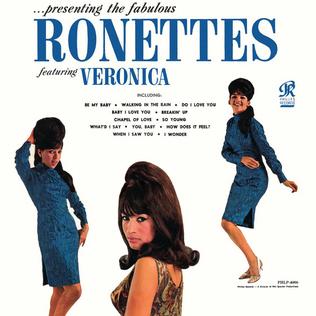
No. 427: Presenting the Fabulous Ronettes Featuring Veronica


Band: The Ronettes
Album: Presenting the Fabulous Ronettes Featuring Veronica
Why Rolling Stone gets it right: Led by Phil Spector's then-wife Ronnie, the Ronettes were the "dangerous" girl group. The band's harmonies and Spector-signature wall of sound made for girl group classics like "Chapel of Love," "Baby, I Love You" and "Be My Baby."
Why Rolling Stone gets it wrong: I like this placement. The girl group phase of American popular music is sometimes forgotten, but is well-represented in the list.
Best song: "Be My Baby" is a classic.
Worst song: "How Does It Feel?" isn't very good.
Is it awesome?: Yes.

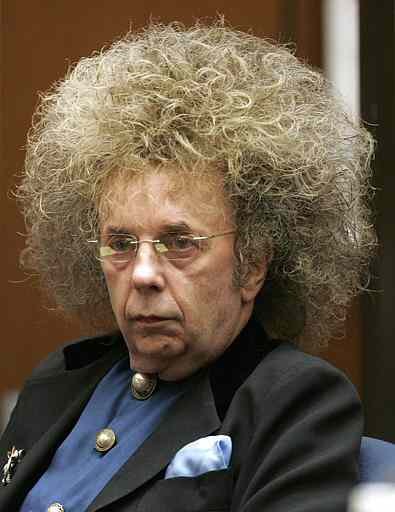
Phil Spector is a giant in rock and roll history, though I wonder how many people actually know much about him. I imagine most people my age who know about him are only familiar with his ridiculous hair experiments and murder trial than his place in rock and roll.

With all that said, he was clearly a bad dude. He threatened his wife Ronnie and... well, I'll just quote a large chunk of our good friend Wikipedia:

Spector's domineering attitude led to the dissolution of their marriage. Bennett was forbidden to speak to the Rolling Stones or tour with the Beatles, for fear of infidelity. Bennett claims Spector showed her a gold coffin with a glass top in his basement, promising to kill and display her should she leave him. During Spector's reclusive period in the late 1960s, he reportedly kept his wife locked inside their mansion. She claimed he also hid her shoes to dissuade her from walking outside, and kept the house dark because he didn't want anyone to see his balding head. Spector's son later claimed that he was kept locked in his room, with a pot in the corner to be used as a toilet. Ronnie Spector did leave the producer and filed for divorce in 1972. She wrote a book about her experiences, and said years later, "I can only say that when I left in the early '70s, I knew that if I didn't leave at that time, I was going to die there" [3]. She and Spector separated in 1973 and divorced one year later.


That's O.J. territory, ladies and gentlemen. That's Ike territory. Not good.

---

As my astonishment of previous American culture continues, the Ronettes were considered "bad girls" in their time of popularity. They wore beehives, short skirts and heavy eyeliner. Today, if a singer wore a beehive, a short skirt and heavy eyeliner, she's be... Hmmm... Amy Winehouse. Is she a bad girl?

OK, so, don't answer that. My bigger point is that Amy Winehouse isn't a bad girl because she wears a beehive, dark eyeliner and a short skirt. She's a bad girl because she smokes crack, doesn't want to go to rehab (no, no, no).

Bad girls in 2008 use drugs and they go out sans panties and they make sex tapes with camera phones.

---

The Ronettes came at the end of the girl group phase of American popular music. The era wasn't long; Everyone seemed to fall off into Motown and the Beatles within a couple of years. This record culls the singles from the Ronettes -- Spector-produced Wall of Sound soundscapes that still sound resonant today. Ronnie's voice is exquisite on songs like "I Wonder" and Phil Spector's "Be My Baby" is his masterpiece of masterpieces.

Sadly, this album is way out of print. However, if you can get your hands on a Ronettes greatest hits compilation, get it. It's worth it.

Wednesday, March 26, 2008

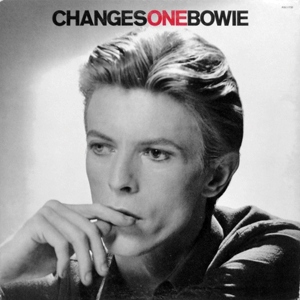
No. 425: ChangesOneBowie


Band: David Bowie
Album: ChangesOneBowie
Why Rolling Stone gets it right: David Bowie's first real compilation was a giant hit, selling three million copies.
Why Rolling Stone gets it wrong: Well, it's a greatest hits compilation.
Best song: Well, it's a greatest hits compilation, so the whole record is great.
Worst song: Eh.
Is it awesome?: Sure.

Blah.

Greatest hits compilations aren't my favorite thing and Bowie isn't my favorite artist.

Certainly, 1976 was around the height of Bowie's art and when he released "Station to Station." It was, from an economic perspective, smart for Bowie to release the "ChangesOneBowie" to capitalize.

Look, it's a nice little collection. Every song on the compilation is good -- that's the nature of greatest hits records. I simply have a problem with the concept of putting a hits record on here. An album is a work in time and a piece of art in and of itself. A greatest hits collection is like a clip show.

Tuesday, March 25, 2008

No. 423: Greatest Hits


Band: The Mamas And The Papas
Album: Greatest Hits
Why Rolling Stone gets it right: The Mamas And The Papas were one of the premier groups of their period. Many members of my parents' generation love the group and hold many of these songs in high regard...
Why Rolling Stone gets it wrong: But, I don't like them.
Best song: "California Dreamin'" is a classic, even if I don't like it.
Worst song: "You Baby" is terrible.
Is it awesome?: Blah.

I've stated my feelings on this group before. To reiterate, this stuff is as dated, if not more dated than the early rock and roll stuff. The multi-voice harmony-laden folk music was mocked in a Christopher Guest film, and for good reason. That stuff is pleasant enough, but with other groups doing it better (Simon and Garfunkel, specifically), why would you listen to this stuff? The lyricism is pretty boring and the arrangements are nothing to love.

Really, it's just a boring greatest hits compilation.

Tuesday, March 18, 2008

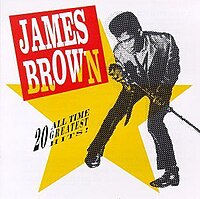
No. 414: 20 All Time Greatest Hits


Band: James Brown
Album: 20 All Time Greatest Hits
Why Rolling Stone gets it right: I mean, it's James Brown and it's his hits.
Why Rolling Stone gets it wrong: The placement makes almost no sense to me. This disc is, basically, a sampler from "Star Time," the Brown boxed set. You know my thoughts on greatest hits packages, I'm even more down on this sort of thing.
Best song: "Hot Pants." Classic.
Worst song: Whatever. It's a greatest hits collection.
Is it awesome?: Come on.

Considering the fact that the boxed set this album is culled from is already on the list, I'm not going to elaborate.

Wednesday, March 12, 2008

No. 406: I Do Not Want What I Haven't Got


Band: Sinéad O'Connor
Album: I Do Not Want What I Haven't Got
Why Rolling Stone gets it right: Thanks to an infamous incident on SNL, Sinéad O'Connor is probably ostracized more than she should be. Her voice is certainly distinct and beautiful and the span of sounds on the record is amazing.
Why Rolling Stone gets it wrong: About half the record hits and about half of it misses.
Best song: Outside of the obvious, "The Emperor's New Clothes" is a fine, fine song. "Black Boys on Mopeds" is a brave song.
Worst song: "The Last Day of Our Acquaintance" isn't great.
Is it awesome?: I don't really know.

I've said it before and I'll say it again: The 1990s were a very, very odd decade. To pull a Bill Simmons and quote myself, "it was perfectly acceptable in 1991 to wear a velvet top hat, a tuxedo jacket, no shirt and parachute pants" during that decade.

"I Do Not Want What I Haven't Got" has a sonic similarity to that time. The album has powerful missed-love songs, a few rockers, Celtic balladry, political messages, dance beats and an a cappella album ender.

"Feel So Different" begins the album and it's striking in the power behind O'Connor's voice. In fact, her vitriol in "I should have hatred for you/But I do not have any" and the chorus speaks to a young, vulnerable woman in pain.

"Black Boys On Mopeds" is a stark political song about a police incident. The song's indictment of the racial issues in the U.K. and the hypocrisy of the Thatcher government foreshadowed the later political stances O'Connor would have.

"I Am Stretched on Your Grave" is a dance number of sorts. While a valiant move, it doesn't totally work. Like Portishead after her, O'Connor tries to mesh the melodic and long with the short, quick dance beats of early 90s club music. Portishead does it better.

"Three Babies" has a distinctly Irish sound and O'Connor's natural accent only helps push the song along and "The Emperor's New Clothes" is a song without a chorus. A rocker, the song remains one of the greats on the record and one of O'Connor's best tracks. "I will have my own policies/I will sleep with a clear conscience" is the signature lyric of the song and one that nearly defines O'Connor.

---

One of the claims critics make of "I Do Not Want What I Haven't Got" is that it was influential
In fact, AllMusic.com says "foreshadowed the rise of deeply introspective female singer/songwriters like Tori Amos and Sarah McLachlan, who were more traditionally feminine and connected with a wider audience."

I guess that's a compelling argument, though, I would give another argument for inclusion on this list:


"Nothing Compares 2 U" is a song written by Prince and perfected by O'Connor. Certainly, the song's arrangement offers a reverential tone as choirs provide backup vocals and an string synth/organ synth combination is almost celestial. Over it all, O'Connor's broken, sad voice lilts around the breakup song's lyrics. Quite simply, it's among the greatest breakup songs ever and the video is a perfect compliment to the song.

If nothing, the album should be on the list if only for that song.

Wednesday, February 20, 2008

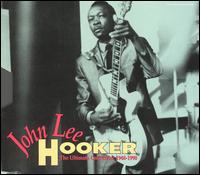
No. 375: The Ultimate Collection


Band: John Lee Hooker
Album: The Ultimate Collection
Why Rolling Stone gets it right: If there's a Mt. Rushmore of blues artists, John Lee Hooker is on it. This greatest hits set contains all of Hooker's classics, which are largely rock and roll classics.
Why Rolling Stone gets it wrong: Because of the nature of blues' time as a genre, the greatest hits set is fine, but a lot of the hits aren't so great. The songs on the first disc mostly run together.
Best song: "Boom Boom" is near perfect.
Worst song: "No More Doggin'" isn't great.
Is it awesome?: It's a good quarter of a set.

I was talking to a friend this weekend about music with which we have no strong connection. Blues, to me, is one of those genres.

My connection, of course, is that rock and roll is a direct descendant of the blues. And, as such, John Lee Hooker's best (and most famous) have been covered by many rock and rollers.

So, as such, my favorite songs from this set are the ones you probably know. "Boom Boom," "You Know, I Know," "Crawlin' King Snake" and, of course, "One Bourbon, One Scotch, One Beer" are my favorites from this set.

John Lee Hooker has a great voice and his ability to take his pain and vocalize it through his gritty vocals is a quality the best bluesmen have and Hooker had it.

Overall, though, the first disc of this set mostly runs together, but the first half of the second disc is brilliant, distinct and near-perfect.

Wednesday, February 6, 2008

No. 355: Between The Buttons


Band: The Rolling Stones
Album: Between the Buttons
Why Rolling Stone gets it right: The Stones' pretentiousness is evident on this album. Despite doing a fair amount of blue collar blues rock, both Richards and Jagger were upper class lads and their upper crust British society leanings come out on "Between The Buttons." I kind of respect this, despite not being a Stones fan.
Why Rolling Stone gets it wrong: I'm tired of the Stones and this is one of the band's least consequential albums.
Best song: "Something Happened to Me Yesterday" is a great drug anthem.
Worst song: "Who's Been Sleeping Here?" stinks.
Is it awesome?: Nope.

You know what, you've read this post before. The Stones are an iconic band (hell, the magazine is sorta named after them) and this is one of their early(ish) albums. It's got some classic songs -- "Something Happened to Me Yesterday" on both versions and "Ruby Tuesday" and "Let's Spend the Night Together" on the American version -- but, overall, the album is a sad reflection of a band nowhere near its contemporaries. While the Beach Boys were doing "Pet Sounds," the Who was doing "The Who Sell Out" and the Beatles were doing "Sgt. Pepper," this is what the Stones were doing?

I've said it before and I'll say it again. The Stones are a greatest hits band. Nothing more, nothing less.

Wednesday, January 30, 2008

No. 345: Stop Making Sense


Band: The Talking Heads
Album: Stop Making Sense
Why Rolling Stone gets it right: If there is a better concert film, I'd like to see it. The Talking Heads' off-kilter and strange brand of New Wave permeates the album, as it is mostly a set of the band's best hits.
Why Rolling Stone gets it wrong: Two problems. The first, of course, is the greatest hits conundrum. We've examined this a million times. The other inherent problem is this ranking is probably based on the movie more than the album. That's all good and well, but because an Oscar-winner directed a movies doesn't mean the album is great. I mean, it is, but still, one does not equal the other.
Best song: Considering it's largely a greatest hits compilation, just about every song is great. Since it's the Heads, I'll repeat my love for "Crosseyed and Painless."
Worst song: "Slippery People" isn't great.
Is it awesome?: Of course.

"Hi. I've got a tape I want to play you."

So begins "Stop Making Sense." The band's sublime Jonathan Demme-directed concert film is a series of mostly extended shots of the band playing in front of crowds during the band's 1983 tour. The stage is stark, as David Byrne didn't want many distractions for the filming.

The film, of course, is famous for the "big suit" Byrne wears at the end of the film. An homage to Japanese Nogaku theater styles, the suit was become a symbol of the band's quirkiness. It's classic Byrne, as a bizarre look at the world around them.

---

I can't go on too much about the record. I love the Talking Heads, so my feeling on the record is that it's great. "Life During Wartime" is a strange, impassioned funk song. "Once in a Lifetime" and "Crosseyed and Painless" are played flawlessly to the original versions. "Take Me To The River" is perfectly in Byrne's range. The tape effect of the band in "Psycho Killer" is probably the album's best portion, as Byrne wrestles the sound from the tape.

But, again, it's sort of a greatest hits compilation. The audience is potted down for most of the recording and the band is as tight as ever.

Friday, January 25, 2008

No. 340: Damaged


Band: Black Flag
Album: Damaged
Why Rolling Stone gets it right: The first full length album from the seminal LA hardcore band was Henry Rollins, "Damaged" is a testament to teenage frustration. Youth and power go hand in hand on "Damaged," even though the album is decidedly anti-authority. In true punk fashion, the band had problems with the label and distributor.
Why Rolling Stone gets it wrong: I'd probably put this one higher.
Best song: "Six Pack," "TV Party," "Rise Above," etc. Whatever, they're all great.
Worst song: "Damaged I" goes on too long.
Is it awesome?: Absolutely.

Before he was a TV host, spoken word recording artist, author, actor or philosopher king, Henry Rollins was the singer of Black Flag. When Dez Cadena moved over to guitar, Hank took over as the band's vocalist.

The continuing theme within "Damaged" is, like most hardcore, aggression and frustration. Despite AllMusic saying that most of Black Flag's music "just sounded petulant and bored," "Damaged" starts with one of the band's anthems, "Rise Above." The song's lyrics reflect the overall hatred of authority ("We are tired of your abuse/Try to stop us its no use"), evidenced in the band's constant conflicts with the police, their record distributor, club owners, etc. The binary refrain in "What I See" ("I want to live. I wish I was dead.") reflects the melodrama evident in the youthful existence that the band parroted often.

Alcoholism isn't funny, but it's powerful in one of the album's highlights, "Six Pack." The idea of "I was born with a bottle in my mind, now I've got a sixer I'll enver run out" is classicly clever and angry, the band's signature. Rollins' Waits-esque growl is perfect for the song, though he was likely not drinking, but destroyed on acid while recording it.

"TV Party" is probably the silliest Black Flag song and the band's least aggressive. Relying on goofy full-band backing shouting ("all right!" and the shouting of various popular early '80s -- "That's Incredible," "Fridays," etc. -- TV shows) and a raucous bassline, the song is the simple description of a TV party and the sadness that occurs when the band's TV stops working. Again, it's silly, but tons of fun and the band's least punk song, despite it backing up the punk rock slacker image.

---

Black Flag's loose musicianship is one of the hallmarks of the band. Greg Ginn's solos, while skilled, don't have the crispness of the metal by which he was influenced. The riffing and transitions sound, at times, sloppy and hurried, though entirely by design. The swing beat bass lines are put together well, but Ginn and Rollins are the stars of this particular show.

---

Black Flag was one of the bands that introduced me to punk rock. As a freshman in high school, I befriended some kids in a band (I cannot remember, for the life of me, what the name of the band was) who played Meat Puppets and Black Flag covers. I was sort of familiar with Rollins, as Rollins Band has a minor hit when I was in junior high. I got a tape from my cousin of the band's greatest hits collection ("Wasted...Again") and fell in love.

"Damaged" is the culmination of West Coast hardcore. Like Minor Threat, the band almost personifies hardcore punk rock. This album is angst before it became "alternative" or one of the calling cards of Sub Pop records in the early 1990s.

Also, it was released the year I was born. Strange.

Thursday, January 24, 2008

No. 338: Cheap Thrills


Band: Big Brother and the Holding Company
Album: Cheap Thrills
Why Rolling Stone gets it right: Janis Joplin remains a boomer icon and this album was the first to showcase her voice.
Why Rolling Stone gets it wrong: The album isn't much more than blues rock with a great singer.
Best song: "Piece of My Heart" is pretty good. Their version of "Summertime" is good.
Worst song: "Ball and Chain" is too long.
Is it awesome?: Nope.

At what point does this list just become pointless hero worship? Joplin's voice is great, but she's a greatest hits artist, at most.

The inclusion of this album on here is either based on the over-love for the San Francisco scene or the fact that R. Crumb did a badass album cover. I'm hoping it's the latter.

Tuesday, January 15, 2008

No. 324: The Very Best of Linda Ronstadt


Band: Linda Ronstadt
Album: The Very Best of Linda Ronstadt
Why Rolling Stone gets it right: Ronstadt's voice is among the best in music and her interpretations are among the best.
Why Rolling Stone gets it wrong: Having a greatest hits compilation on here is dumb, especially one that came out a year before the list came out.
Best song: "You're No Good" remains my favorite song by Ronstadt.
Worst song: "Desperado" stinks, though an excellent "Seinfeld" episode used it as a big plot device.
Is it awesome?: Nope.

I'm going to save you from another of my famous greatest hits rants and send you to my piece about "Heart Like A Wheel."

Otherwise, I don't like "Desperado."

Tuesday, December 25, 2007

No. 293: Simon and Garfunkel's Greatest Hits


Band: Simon and Garfunkel
Album: Simon and Garfunkel's Greatest Hits
Why Rolling Stone gets it right: Certainly one of the more literate acts from the '60s, S&G wrote songs so distinctly about that period. Their music was enjoyable on a couple of levels and certainly interesting. A greatest hits package from such a popular and influential group is certainly good. Also, look at that 'stache.
Why Rolling Stone gets it wrong: Well, it's a greatest hits package for, essentially, a soft rock group. I like Art Garfunkel's voice as much as the next guy and I think Paul Simon is a smart dude, but this is the kind of stuff that belongs on Lite FM.
Best song: “Cecilia” and “Mrs. Robinson” remains my favorite songs by S&G.
Worst song: I don't love “America.”
Is it awesome?: Sure, but it's a greatest hits package. So...If it's not awesome, the band stinks.

By now, regular readers know my thoughts on greatest hits packages.

This particular package is interesting if only because it has four previously unreleased live tracks in addition to the standard 10 hits. This is less impressive to me; For the most part, S&G didn't do a whole lot of studio trickery. It's not like they're Pink Floyd or The Who.

Thursday, December 20, 2007

The process

A commenter recently wondered how many times I listen to each record before I write each piece, so I figured now would be as good a time as any to explain the process by which I do each piece of this project. I think it's a pretty good procedure and has produced some decent results.

The first thing I do is, of course, get the album. At the beginning of the project, I printed out the list and went to my CD collection (approximately 1,700 CDs and 250ish vinyl records with a lot of overlap). If I didn't have the album, I would borrow it from a friend, take it out from the library or (mostly) buy it. This, so far, has meant many hours at the thrift store by my apartment and at CDepot. also, a great deal of money spent at the iTunes store. At the start of the project, I had about 250 of the 500 albums. I currently have about 425, including all the albums I've reviewed so far with a few notable exceptions:

  • Jackie Wilson's "Mr. Excitement" and Jerry Lee Lewis' "All Killer No Filler" are way out of print and I was not willing to pay over $100 for each. I obtained two different copies of other greatest hits collections for each artist and was able to get all the tracks on each collection.

  • The Robert Johnson collections were not out of print, but I already had two different Johnson collections with the exact same songs. So, I just made a different playlist on my iPod with the songs sequenced as the RS-approved collections have.

  • I borrowed, but did not rip, the "Anthology of American Folk Music" and the Ray Charles box set.


Everything else is either in my iTunes library at home or on a vinyl record on my bookcase.

The next step, of course, is listening to the record. I listen to every record at least five times (if I'm not already familiar with it. If it's something like "Nevermind," any of Beatles records or "Metallica," I already know it and will only listen two or three times). Most of the time, two listening are on my iPod (yes, I know. The sound quality isn't as good.) in transit. Being that most people experience music in this way, I find this to be a great first look at any record. Similarly, it's easy to concentrate on the music while walking to my office from the Metro station, as that route is etched into my brain. I will also listen to the record while playing Playstation (normally FIFA 2007, in case you care).

(For vinyl, I do all of the listening while eating dinner or playing Playstation.)

Finally, I'll take one or two more listens while I'm writing the review.

As for the actual writing, I like to read a little bit on each record. This includes looking the record up on following Web sites:


  1. Rolling Stone's 500 album site (obviously)

  2. Wikipedia

  3. Allmusic.com

  4. Robert Christgau's site

  5. Pitchforkmedia.com (if applicable)

  6. Any genre sites (The Source, for example)


The research is often done while writing the review, so the composiution of each review takes about two hours each. Some take considerably less time (seriously, I listened to that album probably 10 [!] times and couldn't think of anything to say). Some take more. I even farmed a few out.

Sometimes, I don't have a lot to say and often, I don't have the time to write as much as I'd like (I have a full-time job, after all).

I then will put the review down and revisit it the next day (I write everything a two days or so before they're posted). This is when I'll do my final edits, mostly on spelling, grammar and such. Stuff, of course, falls through the cracks.

I try to write about my personal experiences with records and mix it with some fun(ish) facts about each record. If I find something interesting in my research, I'll write about it, but I'm not trying to be some sort of repository of album history. The Web already has too much of that.

I hope everyone enjoys my nonsense. I'm enjoying writing it and I'm glad more than five people are reading it.

Wednesday, December 19, 2007

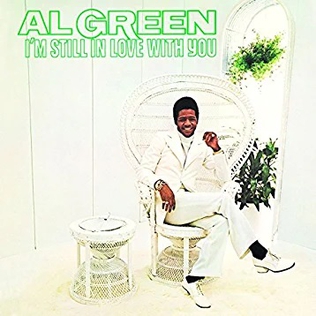
No. 285: I'm Still in Love With You


Band: Al Green
Album: I'm Still in Love With You
Why Rolling Stone gets it right: One of Green's classic albums, "I'm Still in Love with You" has him doing rock standards and his usual sugary sweet R&B.
Why Rolling Stone gets it wrong: I have not really fallen in love with Green.
Best song: The title track is great.
Worst song: "Oh, Pretty Woman" is bad.
Is it awesome?: I don't think so.

One of the fun things about this project is doing the research for each album. In the original 1972 review for "I'm Still in Love With You," Rolling Stone reviewer Vince Aletti writes:

Both Bill Withers and Curtis Mayfield are taking steps in these same directions but neither have that certain ego-driven Star Quality that would qualify them as top contenders for the long-vacant Otis Redding heavyweight spot


Weird, eh? Withers has no albums on the list, though I'd argue that "Still Bill" deserves a spot. Mayfield has one proper album and one compilation with the Impressions. Green has two proper albums and a greatest hits compilation.

So, just as in 1972, Al Green wins out.

---

Maybe it's because I tend towards being a contrarian or maybe it's because I just don't like too much sugar in vocals, but I'm not in love with Al Green. Certainly hearing him do "Oh, Pretty Woman" is odd. Not in that he's playing a rock and roll standard -- Otis played several in his time. Rather, it's striking to hear such a different version that is so very inferior to the original and -- to a lesser extent -- another version (Van Halen's cover on "Diver Down").

Still, the highlights of the record are pretty excellent. The album highlight, "Love and Happiness," was never released as a single but radio devoured it. It's a wonderful little song, influenced as much by a preacher's sermon in rhythm as it is by the church of Otis Redding.

"Look What You've Done for Me" and the title track are nice little romantic songs and "Simply Beautiful" is sweet. Green's version of the Kris Kristofferson-penned "For the Good Times" is much better than Green's version of Orbison's classic, certainly.

I wouldn't heap the praises RS has (both in 2003 and in 1972), but "I'm Still in Love with You" is one of Green's best albums. He's still a greatest hits artist for me, but this one is not bad.

Monday, December 17, 2007

No. 282: The Cars


Band: The Cars
Album: The Cars
Why Rolling Stone gets it right: The Cars' success helped bring New Wave into the mainstream as human ugly stick Ric Ocasek's guitar work and songwriting created a sort of proto-nerd rock.
Why Rolling Stone gets it wrong: I'm comfortable with this placement.
Best song: "Just What I Needed" is one of the great lead singles of all time.
Worst song: "I'm in Touch With Your World" isn't great.
Is it awesome?: Absolutely.

I wish I still had the booklet, but the liner notes from one of the Cars' greatest hits compilations (obviously, I'm paraphrasing) described the band as in a precarious New Wave place. The Cars were just punk enough for punks to like them, but also New Wave enough to get shows at CBGB's and have the punk rockers to enjoy them, as well. In essence, they got the best of both worlds.

On the strength of the band's first record, it's tough to argue. In fact, the first record has just the smallest tinge of New Wave quirkiness that the Talking Heads reveled in. Rather, Ric Ocasek's songwriting and Roy Thomas Baker's clean production made it so that the band would find serious radio play.

It is, really, a pretty amazing record. The band used to joke that the album should've been called "The Cars' Greatest Hits" from the start three (!) songs charted from the album. Those three songs -- "Just What I Needed," "My Best Friend's Girl" and "Good Times Roll" -- are all great fun and the album has a few non-single tracks of awesomeness.

"Don't Cha Stop" and "You're All I've Got Tonight" are both tons of fun, while "Moving in Stereo" is a signature song from the 1980s, thanks to its place in one of the most famous scenes in movie history.

The Cars are, for the most part, a greatest hits band. But, this album is a ton of fun.