Showing posts sorted by relevance for query greatest hits. Sort by date Show all posts

Thursday, October 4, 2007

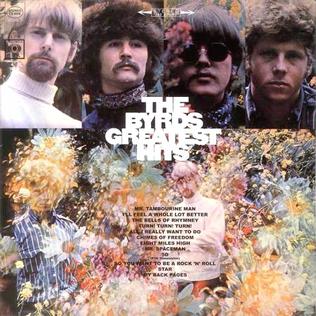
No 178: The Byrds Greatest Hits


Band: The Byrds
Album: The Byrds' Greatest Hits
Why Rolling Stone gets it right: The fifth album by the band was released during the summer of love and gives a nice soundtrack to that period. To be totally honest, I think I'm getting a little Stockholm Syndrome with the Byrds.
Why Rolling Stone gets it wrong: Blah blah greatest hits blah blah lots of albums blah blah Byrds are boomer nostalgia blah blah. You've heard it all before.
Best song: It's a greatest hits compilation, so all the songs are pretty great. I like "I'll Feel A Whole Lot Better" a lot.
Worst song: See above. "The Bells of Rhymney" isn't on par with the rest of the songs, but it's still great.
Is it awesome?: Well, duh. It's a greatest hits compilation.

Let's make this quick...

Byrds albums on the 500 list - Five
Artists who have more albums on the list - Four
Number of artists with more albums who also have a compilation - Zero

I understand that "The Byrds' Greatest Hits" was released early in the band's time and two of the records on the list were released after "The Byrds' Greatest Hits." But, those first two records' best songs are on "The Byrds' Greatest Hits," so it's a bit foolish to have all thre of those albums on here.

Wednesday, September 5, 2007

No. 135: Greatest Hits


Band: Elton John
Album: Greatest Hits
Why Rolling Stone gets it right: Well, it's a greatest hits compilation that has sold 10 million copies. To say that Elton John isn't important would be foolish.
Why Rolling Stone gets it wrong: It's a greatest hits compilation for a guy who has three other records on the list. It doesn't make tons of sense.
Best song: Well, they're all hits and all are pretty great.
Worst song: The only song I don't really like is "Border Song." It's got a nice message, but I'm lukewarm on it nonetheless. "Daniel" isn't perfect.
Is it awesome?: I guess. I mean, it's a greatest hits comp from one of the best-selling artists of all time. What did you expect? Crap?

There isn't a ton to say here about this compilation. Elton John has sold tons and tons of records and his hits are fantastic. This compilation reflects that.

As to not bore you, let's go listy...

  1. "Your Song" is one of my favorite love songs. It's simple and strikingly beautiful. Like George Harrison's "Something," Bernie Taupin (Elton John's lyricist) captured the undefinable characteristics that come from "love" in the sweetest sense.

  2. I don't love "Daniel", largely because Elton John's piano work isn't hugely impressive. Taupin's lyrics are a little overly sentimental, but that's nitpicking. it's a song about Vietnam, which is pretty impressive for a British singer to do. It's still a good song, just not great.

  3. "Honky Cat" is a ridiculous song that mocks and embraces a genre foreign to most of us. It sounds like Vaudeville, basically.

  4. I've written about "Goodbye Yellow Brick Road" a bit and it remains my favorite song of his.

  5. My qualm with "Saturday Night's Alright For Fighting" is that Elton John -- all glasses, platforms and wigs -- could kick anyone's ass. I guess he's not a small man, so anything is possible. Still, if you don't think about the logistics of Elton John getting into a fight, it's a really fun song.

  6. I have a friend (hello, Jake!) who claims "Rocket Man" is simply a rip off of David Bowie's "Spade Oddity," a claim which I dispute. It's a pretty simple pop ballad, but it's wonderful.

  7. I've also written about "Bennie and the Jets". It's a great deal of fun.

  8. "Don't Let the Sun Go Down on Me" suffers from the same problems as "Daniel," only in a much more superficial context. It's sentimental but in a love song way and a slow ballad way.

  9. I enjoy the inclusiveness of "Border Song" in the final verse. John -- who wrote the verse himself -- croons "Holy Moses, let us live in peace/let us strive to find a way to make all hatred cease/there's a man over there. What's his colour I don't care/he's my brother let us live in peace." That's a nice message to just an OK song.

  10. The record ends with good old "Crocodile Rock." It will always remain a patently ridiculous song in my mind for one reason and only for this one reason: Elton John's appearance on "The Muppet Show." Hell, forget linking to it... Let's embed that fucker:


    How great is that?


So, that's Elton John's "Greatest Hits." It's got some great tracks.

Tuesday, December 25, 2007

No. 293: Simon and Garfunkel's Greatest Hits


Band: Simon and Garfunkel
Album: Simon and Garfunkel's Greatest Hits
Why Rolling Stone gets it right: Certainly one of the more literate acts from the '60s, S&G wrote songs so distinctly about that period. Their music was enjoyable on a couple of levels and certainly interesting. A greatest hits package from such a popular and influential group is certainly good. Also, look at that 'stache.
Why Rolling Stone gets it wrong: Well, it's a greatest hits package for, essentially, a soft rock group. I like Art Garfunkel's voice as much as the next guy and I think Paul Simon is a smart dude, but this is the kind of stuff that belongs on Lite FM.
Best song: “Cecilia” and “Mrs. Robinson” remains my favorite songs by S&G.
Worst song: I don't love “America.”
Is it awesome?: Sure, but it's a greatest hits package. So...If it's not awesome, the band stinks.

By now, regular readers know my thoughts on greatest hits packages.

This particular package is interesting if only because it has four previously unreleased live tracks in addition to the standard 10 hits. This is less impressive to me; For the most part, S&G didn't do a whole lot of studio trickery. It's not like they're Pink Floyd or The Who.

Wednesday, March 26, 2008

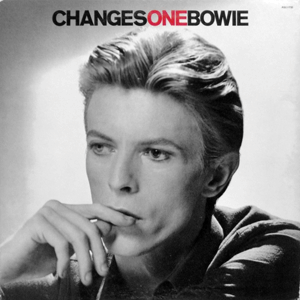
No. 425: ChangesOneBowie


Band: David Bowie
Album: ChangesOneBowie
Why Rolling Stone gets it right: David Bowie's first real compilation was a giant hit, selling three million copies.
Why Rolling Stone gets it wrong: Well, it's a greatest hits compilation.
Best song: Well, it's a greatest hits compilation, so the whole record is great.
Worst song: Eh.
Is it awesome?: Sure.

Blah.

Greatest hits compilations aren't my favorite thing and Bowie isn't my favorite artist.

Certainly, 1976 was around the height of Bowie's art and when he released "Station to Station." It was, from an economic perspective, smart for Bowie to release the "ChangesOneBowie" to capitalize.

Look, it's a nice little collection. Every song on the compilation is good -- that's the nature of greatest hits records. I simply have a problem with the concept of putting a hits record on here. An album is a work in time and a piece of art in and of itself. A greatest hits collection is like a clip show.

Friday, July 13, 2007

No. 60: Greatest Hits


Band: Sly & the Family Stone
Album: Greatest Hits
Why Rolling Stone gets it right: Sly Stone was a musical genius that fused black and white music in a way that personified the sixties. His optimistic hippy outlook of the band's first few singles turned into the gritty realism of the band's early '70s work.
Why Rolling Stone gets it wrong: Greatest hits packages are never a good idea on this list if there are actual non-compilation records on here for the band. "Stand" and "There's a Riot Goin' On" are both on the list, and, like, half of "Stand" is on "Greatest Hits."
Best song: "I Want To Take You Higher" is probably my favorite song by Sly.
Worst song: "M'Lady" isn't fantastic.
Is it awesome?: Well, yeah. It's a greatest hits compilation.

While the band was on a two-year recording hiatus, Epic Records compiled tracks from the band's three albums and with three new tracks -- "Everyone is a Star", "Hot Fun in the Summertime", and "Thank You (Falettinme Be Mice Elf Agin)" -- to satiate the public's need for Sly & The Family Stone.

The reason for the hiatus appears to be that Sly was on drugs nearly 24 hours a day. This caused some internal strife within the band, eventually drummer Gregg Errico left the band.

Nevertheless, Sly was a genius. Because of his years as a radio DJ at Oakland's KDIA, Stone had loads of knowledge of current music trends. As a black artists in the late '60s, Sly was able to bring gospel, dance and soul into the white music of rock and roll and harder stuff (the fuzz bass being the operative thing). The church organ style of "I Want To Take You Higher" melds with the hard rock of the distorted guitar. "Everybody is a Star" is incredibly optimistic, while "Stand!" is a call to arms that predates the quasi-militancy of "There's A Riot Goin' On" and "Thank You (Falettinme Be Mice Elf Agin)" is a furthering of the theme.

If you don't have "Stand!," this package is a must-have. Sly & The Family Stone is wildly underrated as group.

Wednesday, July 4, 2007

No. 46: Legend


Band: Bob Marley & The Wailers
Album: Legend
Why Rolling Stone gets it right: Well, Marley is the most important artist in the history of his genre. This greatest hits package is the introduction to his music for a lot of people.
Why Rolling Stone gets it wrong: Um. As I've mentioned, I have questions about the concept of greatest hits albums on the list, especially considering the placement of about a million other Marley records on the list.
Best song: It's a greatest hits package.. They're all pretty good.
Worst song: Eh. Greatest hits.
Is it awesome?: It is, but it's still a greatest hits package.

There's an inherent problem with some artists. They may not be album artists in the same sense as Pink Floyd or Led Zeppelin or something, but they've put out a million great songs.

Chuck Berry is an example of this, hence "The Great Twenty-Eight" being the example. James Brown is, as well (we'll see that in a few weeks with "Star Time").

Bob Marley isn't.

The list has several non-"Legend" Marley records on it. Clearly, they're trying to get the reggae legend on here, represented well, but by putting "Legend" on here along with the rest of his records is silly.

Thursday, September 13, 2007

No. 147: Dreams to Remember: The Otis Redding Anthology


Band: Otis Redding
Album: Dreams to Remember: The Otis Redding Anthology
Why Rolling Stone gets it right: Otis Redding's voice and songwriting is nearly unparalleled. His mentor Sam Cooke started soul music, but Redding nearly perfected it and this collection is full of his best stuff.
Why Rolling Stone gets it wrong: It's a greatest hits package for an artist who has multiple albums on this list.
Best song: "These Arms of Mine" is a great one.
Worst song: "Love Man" stinks.
Is it awesome?: Again, more greatest hits problems.

And here we have another double disc greatest hits compilation. Like the Same Cooke record on this list, a double disc of Otis Redding makes some sense. Most people look at Otis as a singles artist and don't identify him with a singular album or group of albums.

AllMusic.com puts it well:

So, Dreams to Remember is in limbo -- a fine collection that isn't really necessary. It's not a bad choice, to be sure, but The Very Best of Otis Redding, Vol. 1 and Otis! are better choices, depending on your tastes.


I think that's fitting. If you're not a big Otis fan, you should pick this up. His hits are fantastic and he was one of the best songwriters -- and singers -- ever. Overwhelmingly, though, to put on the list is silly. Why have a greatest hits compilation for a guy with records on here?

Tuesday, March 18, 2008

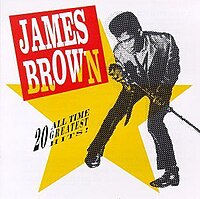
No. 414: 20 All Time Greatest Hits


Band: James Brown
Album: 20 All Time Greatest Hits
Why Rolling Stone gets it right: I mean, it's James Brown and it's his hits.
Why Rolling Stone gets it wrong: The placement makes almost no sense to me. This disc is, basically, a sampler from "Star Time," the Brown boxed set. You know my thoughts on greatest hits packages, I'm even more down on this sort of thing.
Best song: "Hot Pants." Classic.
Worst song: Whatever. It's a greatest hits collection.
Is it awesome?: Come on.

Considering the fact that the boxed set this album is culled from is already on the list, I'm not going to elaborate.

Wednesday, January 30, 2008

No. 345: Stop Making Sense


Band: The Talking Heads
Album: Stop Making Sense
Why Rolling Stone gets it right: If there is a better concert film, I'd like to see it. The Talking Heads' off-kilter and strange brand of New Wave permeates the album, as it is mostly a set of the band's best hits.
Why Rolling Stone gets it wrong: Two problems. The first, of course, is the greatest hits conundrum. We've examined this a million times. The other inherent problem is this ranking is probably based on the movie more than the album. That's all good and well, but because an Oscar-winner directed a movies doesn't mean the album is great. I mean, it is, but still, one does not equal the other.
Best song: Considering it's largely a greatest hits compilation, just about every song is great. Since it's the Heads, I'll repeat my love for "Crosseyed and Painless."
Worst song: "Slippery People" isn't great.
Is it awesome?: Of course.

"Hi. I've got a tape I want to play you."

So begins "Stop Making Sense." The band's sublime Jonathan Demme-directed concert film is a series of mostly extended shots of the band playing in front of crowds during the band's 1983 tour. The stage is stark, as David Byrne didn't want many distractions for the filming.

The film, of course, is famous for the "big suit" Byrne wears at the end of the film. An homage to Japanese Nogaku theater styles, the suit was become a symbol of the band's quirkiness. It's classic Byrne, as a bizarre look at the world around them.

---

I can't go on too much about the record. I love the Talking Heads, so my feeling on the record is that it's great. "Life During Wartime" is a strange, impassioned funk song. "Once in a Lifetime" and "Crosseyed and Painless" are played flawlessly to the original versions. "Take Me To The River" is perfectly in Byrne's range. The tape effect of the band in "Psycho Killer" is probably the album's best portion, as Byrne wrestles the sound from the tape.

But, again, it's sort of a greatest hits compilation. The audience is potted down for most of the recording and the band is as tight as ever.

Friday, August 31, 2007

No. 129: 40 Greatest Hits


Band: Hank Williams
Album: 40 Greatest Hits
Why Rolling Stone gets it right: As Robert Johnson and Muddy Waters are to rock and roll, Hank Williams is to country and western music. If you're even remotely knowledgeable about music, you'll recognize too many of those songs to dislike them.
Why Rolling Stone gets it wrong: I don't think they have it wrong.
Best song: Certainly, "Move It On Over," "I'm So Lonely I Could Cry," "Lost Highway," "Hey, Good Lookin'" and "Your Cheatin' Heart" are all classics.
Worst song: There aren't a lot of bad songs, per se, though a lot of the songs run together a fair amount.
Is it awesome?: As much as it isn't my thing, it's pretty remarkable that one guy wrote or made all these songs famous. There are too many classics on here to ignore.

I tried pretty hard to go into this record with as clean a slate as I could. I'm not a country guy -- twang just doesn't excite me -- but Hank Williams is so seminal to folk music, too, that I found myself knowing about a third of the songs on this collection.

Williams, like Robert Johnson before him, recorded in an era when the single was king, so "albums" aren't really there for him. So, the greatest hits conundrum doesn't totally work.

So, there are scads of classics here. Rock and rollers George Thorogood and Bill Haley both covered "Move It On Over" to some success. Artists as diverse as The Raveonettes, Cowboy Junkies, Al Green, Ray Charles and Johnny Cash have covered "I'm So Lonesome I Could Cry." Nat King Cole and Norah Jones have done "Cold, Cold Heart." Joni James had a top ten hit with "Your Cheatin' Heart." Hell, Masi Oka sang "Hey, Good Lookin'" in Japanese on an episode of "Scrubs."

And the songs hold up in any arrangement. Hank Williams was among the greatest songwriters, country or not.

Friday, September 7, 2007

No. 140: Parallel Lines


Band: Blondie
Album: Parallel Lines
Why Rolling Stone gets it right: Blondie's breakout record is still pretty amazing to hear today. Certainly Madonna got a lot of her style from Debbie Harry and the punk scene benefited a great deal from a pretty face to put on the scene. "Parallel Lines" had them spanning genre, hitting straight up rock in "Hanging By The Telephone," punk in "Call Me" and disco in "Heart Of Glass."
Why Rolling Stone gets it wrong: It's hard to argue that this record is more important (or better) than many of the albums behind it on the list ("Straight Outta Compton," the first Who record, the first Zappa record, "The Downward Spiral," "One Nation Under a Groove" or "The Gilded Palace of Sin"). It's pretty great, but it's still a pretty small drop in comparison to
Best song: "Heart Of Glass" is a classic.
Worst song: "I Know But I Don't Know" isn't great.
Is it awesome?: I love it, but I'm biased.

(It seems I start 4-5 of these every week with some "full disclosure" thing, but I'll keep doing that, I guess.)

Full disclosure: I have a giant crush on Debbie Harry. I tend to prefer woman singers to male singers for some reason and Debbie Harry's is fantastic. She's awfully sexy, too, even at whatever age she's telling people she is (52, according to Wikipedia, which makes her more than old enough to be my mother).

I've had a crush on Ms. Harry since I was a child and she was on the Muppet Show doing "One Way Or Another" and "Call Me" while Muppets pranced and sang around her. The Muppet Show peppers a lot of my views on music, as you can imagine.

Anyway, "Parallel Lines" is the turning point in the timeline for the band. Before it, Blondie was a punk band with an attractive female singer. After the album, the band became a sensation. Harry became an icon and the rest, as they say, is history.

Needless to say, "Heart Of Glass" is the classic track. Known as "the disco song" to a lot of Blondie fans, it was originally done as a slow reggae thing but was changed after the band decided to experiment with disco. The keyboards, not really working within the confines of the band's normal sound, seem to overtake the song. Chris Stein's guitar starts and stops in the perfect disc style.

And that voice. Oh, that voice. Harry's soprano-ish pitch falsettos around the verses and lowers during the chorus.

(On YouTube, I was mesmerized by Lily Allen playing with them on the Today Show last year)

---

I'd be lying if I totally understand why this record is on the list while "Best Of Blondie" isn't. For an artist like Blondie, a greatest hits package is probably preferable to their breakthrough album, in most people's minds.

(To review: I think greatest hits packages shouldn't be on the list, save for bands who were around before the album era. The Chuck Berrys and Robert Johnsons of the world, basically.)

Blondie, to all but a select few, is the picture of a greatest hits band. Their albums have a fair amount of filler and their singles are divine. "Best Of Blondie" -- if you'll allow me to write about an album not on the list for a moment -- is a stellar package. It has the first rap song shown on MTV ("Rapture," though most argue about whether it's rap song), the great "Parallel Lines" singles (including the U.K. version of "Sunday Girl" wherein Harry sings in French) and the fantastic "Call Me" and "Atomic," two of my favorite Blondie tracks.

Most reasonable music fans would put "Best Of Blondie" before "Parallel Lines." Then again, the RS people are not reasonable.

---

I think the placement of "Parallel Lines" comes down to two things. First, the album was something of a symbol of the turning point for the successful members of the CBGB scene, specifically the Talking Heads and Blondie. The Heads were broken into the mainstream with 1978's "More Songs About Buildings and Food" at the same time that "Parallel Lines" came out. Both bands became New Wave stalwarts and had to deal with the success that mainstream popularity brought. Blondie, I'd say, did cater more towards the mainstream than any other band in success and I think "Parallel Lines" is a symbol of that. Blondie was a lot less punk after the album came out.

The second reason to put the album on here is Harry. She was a different type of frontwoman, a small part Patti Smith, a big part Nico and a big part supermodel. Her femme fatale persona played off her (and the band's) punk roots to create a sex symbol image that was decidedly absent from rock and roll beforehand. The role of women in music changed a bit when Harry came into the mix and that's important.

---

I love "Parallel Lines," but I'm surely in the minority. I imagine a lot of people look at this record on the RS list the same way I look at the non-"Ziggy" Bowie albums; They just don't need to be there. I think "Parallel Lines" belongs there, but I'm clearly biased.

Wednesday, May 14, 2008

No. 485: All Time Greatest Hits


Band: Loretta Lynn
Album: All Time Greatest Hits
Why Rolling Stone gets it right: One of country's biggest stars, Loretta Lynn's 2002 compilation is a one-stop shop for anyone learning to love her music. She sings of booze, men and jealousy with aplomb.
Why Rolling Stone gets it wrong: Maybe it's just my bias against country, but I could not get really into this record. It's pleasant enough, but it's not as good as the other country on this list, be it Haggard, Parton or Cash.
Best song: "You Ain't Woman Enough (To Take My Man)" is great.
Worst song: "Trouble in Paradise" isn't great.
Is it awesome?: Bad timing. I can't enjoy this as much as I should, due to recent listens to Merle Haggard.

Loretta Lynn is basically worshiped by Jack and Meg White of the White Stripes. It's understandable, as she's, clearly, a tough lady. Her songs don't fuck around. She will cut you if you cross her. In the grand country tradition, she has big hair and an even bigger voice.

"All Time Greatest Hits" is the definitive single-disc country compilation of Lynn's. An accomplished gospel singer, her grit is evident on the record. She threatens a potential interest in her man on "You Ain't Woman Enough (To Take My Man)," and the divide between two in "Louisiana Woman, Mississippi Man."

For a gospel singer, Lynn's amorous songs are a little striking, but fun nonetheless. "Out of My Head and Back in My Bed" and "Wine, Women and Song" and "One's on the Way" are such songs.

The music isn't entirely new and listening to this one directly after "Branded Man" is not good timing. It sounds less than Haggard's masterpiece, though that could just be my untrained-to-country ear. Nevertheless, a fun set.

Tuesday, March 25, 2008

No. 423: Greatest Hits


Band: The Mamas And The Papas
Album: Greatest Hits
Why Rolling Stone gets it right: The Mamas And The Papas were one of the premier groups of their period. Many members of my parents' generation love the group and hold many of these songs in high regard...
Why Rolling Stone gets it wrong: But, I don't like them.
Best song: "California Dreamin'" is a classic, even if I don't like it.
Worst song: "You Baby" is terrible.
Is it awesome?: Blah.

I've stated my feelings on this group before. To reiterate, this stuff is as dated, if not more dated than the early rock and roll stuff. The multi-voice harmony-laden folk music was mocked in a Christopher Guest film, and for good reason. That stuff is pleasant enough, but with other groups doing it better (Simon and Garfunkel, specifically), why would you listen to this stuff? The lyricism is pretty boring and the arrangements are nothing to love.

Really, it's just a boring greatest hits compilation.

Monday, July 9, 2007

No. 52: Al Green's Greatest Hits


Band: Al Green
Album: Al Green's Greatest Hits
Why Rolling Stone gets it right: The top soul record on the list, this collection brings together such classics as "Tired of Being Alone," "Let's Stay Together," "I Can't Get Next To You," and "Here I Am (Come And Take Me)." Few have the honey-gold voice that the Reverend Al does and this collection shows it off.
Why Rolling Stone gets it wrong: I'm not sure RS has it wrong. I suspect soul should have its own list, but being that it's one giant list, it's hard to argue with it being at 51.
Best song: "Let's Stay Together" is a classic among classics.
Worst song: "L-O-V-E" isn't all that good.
Is it awesome?: Sure.

Here's what you know about Al Green:

  • He's a reverend

  • He did "Let's Stay Together," an all-time great.

  • He became a preacher after a woman threw a pot of boiling grits on him.

  • He may have the best voice in the history of R&B/Soul music


"Al Green's Greatest Hits" is awesome. Green has a tight band on every track and his voice oozes with sweetness. "Tired of Being Alone" -- despite it's strange thesis of codependency -- is still used in popular media to evoke the time period in which it was released (1970). "Let's Stay Together" is played daily on radio stations nationwide, remains one of the 10 best love songs ever and has been covered by everyone from Michael Bolton to Tina Turner.

Al Green has the voice. He's an amazing singer and this collection showcases that.

Monday, December 17, 2007

No. 282: The Cars


Band: The Cars
Album: The Cars
Why Rolling Stone gets it right: The Cars' success helped bring New Wave into the mainstream as human ugly stick Ric Ocasek's guitar work and songwriting created a sort of proto-nerd rock.
Why Rolling Stone gets it wrong: I'm comfortable with this placement.
Best song: "Just What I Needed" is one of the great lead singles of all time.
Worst song: "I'm in Touch With Your World" isn't great.
Is it awesome?: Absolutely.

I wish I still had the booklet, but the liner notes from one of the Cars' greatest hits compilations (obviously, I'm paraphrasing) described the band as in a precarious New Wave place. The Cars were just punk enough for punks to like them, but also New Wave enough to get shows at CBGB's and have the punk rockers to enjoy them, as well. In essence, they got the best of both worlds.

On the strength of the band's first record, it's tough to argue. In fact, the first record has just the smallest tinge of New Wave quirkiness that the Talking Heads reveled in. Rather, Ric Ocasek's songwriting and Roy Thomas Baker's clean production made it so that the band would find serious radio play.

It is, really, a pretty amazing record. The band used to joke that the album should've been called "The Cars' Greatest Hits" from the start three (!) songs charted from the album. Those three songs -- "Just What I Needed," "My Best Friend's Girl" and "Good Times Roll" -- are all great fun and the album has a few non-single tracks of awesomeness.

"Don't Cha Stop" and "You're All I've Got Tonight" are both tons of fun, while "Moving in Stereo" is a signature song from the 1980s, thanks to its place in one of the most famous scenes in movie history.

The Cars are, for the most part, a greatest hits band. But, this album is a ton of fun.

Friday, October 5, 2007

No. 179: The Anthology 1961-1977


Band: Curtis Mayfield and The Impressions
Album: The Anthology 1961-1977
Why Rolling Stone gets it right: "The Anthology 1961-1977" is a fantastic compilation of one of the original soul groups on the first disc, with a primer in Mayfield's work on the second disc. The Impressions were a great group and you can get the silky smooth harmonies on this one. This is where a greatest hits compilation works really well.
Why Rolling Stone gets it wrong: This is the type of thing that should probably be higher, as well. The group made a big impression (hardy har har) on black music in the 1960s.
Best song: It's an anthology, so most of the songs are amazing. Of course, "People Get Ready" is the no. 1 stunner, though.
Worst song: I'm not in love with "Amen," due to my worship of the sun.
Is it awesome?: Yes.

The Impressions were a soul group in the 60s fronted by one of my favorite artists, Curtis Mayfield. Hugely influenced by gospel music --two of the members were in a gospel group before they started the Impressions -- the group took almost as much from doo-wop as it did from the religious music of the time.

The early hits, of course, sound a little old, but are also pretty timeless. "Gypsy Woman," "We're a Winner," "Never Let Me Go," "Talking About My Baby" and "Little Young Lover" all could be considered "dated" but are actually "classic."

The Impressions were one of the first groups to really spark social consciousness with some of their civil rights anthems. The first and most famous, of course, is the wonderful 1965 hit "People Get Ready." Later, the band put out "Choice of Colors" and "Check Out Your Mind," all with similar themes and all charted at number three or higher on the R&B charts.

Like Sam Cooke or Otis Redding, I enjoy the first disc of this compilation largely because it reminds me of the "Dusties," the oldies R&B records that were so popular on Chicago radio. I love that sort of stuff.

---

The second disc is basically a Mayfield solo greatest hits, which is exactly as awesome as it sounds. The tracks include the fantastic "(Don't Worry) If There's a Hell Below, We're All Going to Go" from "Curtis" to the "Superfly" highlights "Pusherman," "Superfly" and "Freddie's Dead."

Overall, it's an awesome anthology of great soul music from one of Chicago's finest artists.

Wednesday, February 20, 2008

No. 375: The Ultimate Collection


Band: John Lee Hooker
Album: The Ultimate Collection
Why Rolling Stone gets it right: If there's a Mt. Rushmore of blues artists, John Lee Hooker is on it. This greatest hits set contains all of Hooker's classics, which are largely rock and roll classics.
Why Rolling Stone gets it wrong: Because of the nature of blues' time as a genre, the greatest hits set is fine, but a lot of the hits aren't so great. The songs on the first disc mostly run together.
Best song: "Boom Boom" is near perfect.
Worst song: "No More Doggin'" isn't great.
Is it awesome?: It's a good quarter of a set.

I was talking to a friend this weekend about music with which we have no strong connection. Blues, to me, is one of those genres.

My connection, of course, is that rock and roll is a direct descendant of the blues. And, as such, John Lee Hooker's best (and most famous) have been covered by many rock and rollers.

So, as such, my favorite songs from this set are the ones you probably know. "Boom Boom," "You Know, I Know," "Crawlin' King Snake" and, of course, "One Bourbon, One Scotch, One Beer" are my favorites from this set.

John Lee Hooker has a great voice and his ability to take his pain and vocalize it through his gritty vocals is a quality the best bluesmen have and Hooker had it.

Overall, though, the first disc of this set mostly runs together, but the first half of the second disc is brilliant, distinct and near-perfect.

Wednesday, November 7, 2007

No. 225: The Complete Hank Williams


Band: Hank Williams
Album: The Complete Hank Williams
Why Rolling Stone gets it right: Because two discs of Hank Williams wasn't enough, so, why not 10 discs of Hank?
Why Rolling Stone gets it wrong: Seriously? Ten discs?
Best song: Oh, whatever.
Worst song: Oh, whatever.
Is it awesome?: Sure, but it's 10 goddamned discs.

As much as I complained about the Marley greatest hits thing, this is just idiotic. One or the other, Rolling Stone. I understand Hank Williams is probably the most important country singer ever, but having his entire output, while also having a greatest hits disc 100 spots ahead of it is ludicrous. They didn't even do that for the Beatles!

So, if you care about my feelings on Hank, here they are.

Wednesday, August 29, 2007

No. 126: Remain In Light


Band: The Talking Heads
Album: Remain In Light
Why Rolling Stone gets it right: You know how Paul Simon kept trying to get African percussion into his music? This is what he was trying to do. The Talking Heads, always a band on the edge, got their best production out of producer Brian Eno. Swirling keyboards, danceable African beats, great Jerry Harrison (with guest Adrian Belew) guitar work and David Byrne's fantastic disjointed, paranoid vocals all occupy this record as the band hit its peak as a unit. Also, "Once In A Lifetime."
Why Rolling Stone gets it wrong: I'd have "Remain In Light" higher. I love this album.
Best song: It'd be easy to say "Once In A Lifetime," as it's one of the band's signature songs (and who can forget that video?), but "Crosseyed And Painless" is probably my favorite Heads song.
Worst song: No song is worst. They're all just different levels of great.
Is it awesome?: Absolutely.

I've mentioned what I consider to be greatest hits bands multiple times on this list and I imagine a lot of people would consider The Talking Heads a greatest hits band. These people are wrong, if only for this album. "Remain In Light" is one of my favorite albums because no album works different beats and rhytymns as seamlessly. Employing tons of new people into the band, including African drummers, the Talking Heads went from quirky New Wave band to amazing artists.

Each song is perfectly manicured with chants, percussion, horns and a full cadre of electronics. Eno's super hands-on production -- he is listed as a co-writer on several of "Remain In Light's" songs -- fits the album perfectly.

Byrne his hit high note as a lyricist, here, as well. His "almost sociopathic opening track, "Born Under Punches (The Heat Goes On)" weaves "Psycho Killer" in a more modern concept. The paranoid narrator freaks out as the swirling drums surround him. Eventually, the song evolves into a Parliament/Funkadelic-esque chant-along ("And the heat goes on/Where the hand has been" ), fitting considering one of the Heads' earliest influences was Parliament.

Of course, the classic "Once In A Lifetime" has Eno using a keyboard as a water theme in an instance where I've never heard an instrument make an unnatural sound seem so natural. Tina Weymouth's bass line starts and stops in the classic jerky Heads way that always seems to show that, yes, the Talking Heads are not a normal band. Even with the smooth water-sounding keyboards, this is still the Talking Heads.

Byrne's lyrics on "Once In A Lifetime" are among his best. An attack on suburbia and the American dream that Byrne would later explore in "True Stories," "Once In A Lifetime" decries the greed/conformity of the white picket lifestyle:

And you may find yourself behind the wheel of a large automobile
And you may find yourself in a beautiful house, with a beautiful wife
And you may ask yourself-well...how did I get here?


The water will always flow and Byrne will always attack the status quo. "Once In A Lifetime" attacks that conformity for conformity's sake by simply exposing it: "Same as it ever was."

(Also, the video. That man can dance.)

---

My favorite Heads song is the second track on "Remain In Light," "Crosseyed And Painless." The breakneck pace of the song is based on a sixteenth notes of slightly overdriven guitar, slap bass, looped cowbell and Chris Frantz' drumming. The start/stop melody is an extension of the Heads' earlier work while incorporating a sweet hook showcasing Byrne's best singing on a Heads record.

Of course, this is all built around an almost rap-ish performance by Byrne throughout the rest of the song. He starts off gruffly, explaining his situation -- a man dealing with demons we couldn't imagine, apparently -- with "Lost my shape-trying to act casual!/Cant stop-i might end up in the hospital/I'm changing my shape-i feel like an accident/They're back!-to explain their experience."

He eventually turns the insanity outward in a Stephen Colbert-esque attack on propaganda, truth and the all-too-nebulous "facts." During one hook, Byrne sings "Facts cut a hole in us" while on the subsequent verse, "facts are useless in emergencies."

All this culminates in Byrne's laundry list of what facts can do, with his subtle explanation of relativism:

Facts are simple and facts are straight
Facts are lazy and facts are late
Facts all come with points of view
Facts dont do what I want them to
Facts just twist the truth around
Facts are living turned inside out
Facts are getting the best of them
Facts are nothing on the face of things
Facts don't stain the furniture
Facts go out and slam the door
Facts are written all over your face
Facts continue to change their shape


Again, remember, this is all over a breakneck beat and Afro-Caribbean beats. Never has a philosophical judgment based on paranoia sounded so beautiful, fun and danceable. A wonderfully dark song, "Crosseyed And Painless" sounds anything but.
---

Not for nothing, but I love "Remain In Light" so much that it made me buy a Phish album. I'd heard that Phish did "Remain In Light" as one of their "musical costumes" and had released it as one of their live records. Because I'm a sucker for cover records, I picked it up. And you know what? It doesn't totally suck. Phish don't wank along too much, but rather jam out on what is a fantastic cover. A record like "Remain In Light" is hard to translate live, I'm sure, as it was heavily produced, but Phish did it well.

But, it's that good. Even a band like Phish realized the greatness and didn't touch it. They played it very faithfully to the original.

It's a must-have. It paved the way for Paul Simon and Peter Gabriel's ventures into African music and they can't hold a candle to "Remain In Light."
Wednesday, December 19, 2007

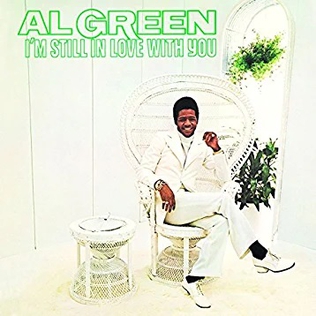
No. 285: I'm Still in Love With You


Band: Al Green
Album: I'm Still in Love With You
Why Rolling Stone gets it right: One of Green's classic albums, "I'm Still in Love with You" has him doing rock standards and his usual sugary sweet R&B.
Why Rolling Stone gets it wrong: I have not really fallen in love with Green.
Best song: The title track is great.
Worst song: "Oh, Pretty Woman" is bad.
Is it awesome?: I don't think so.

One of the fun things about this project is doing the research for each album. In the original 1972 review for "I'm Still in Love With You," Rolling Stone reviewer Vince Aletti writes:

Both Bill Withers and Curtis Mayfield are taking steps in these same directions but neither have that certain ego-driven Star Quality that would qualify them as top contenders for the long-vacant Otis Redding heavyweight spot


Weird, eh? Withers has no albums on the list, though I'd argue that "Still Bill" deserves a spot. Mayfield has one proper album and one compilation with the Impressions. Green has two proper albums and a greatest hits compilation.

So, just as in 1972, Al Green wins out.

---

Maybe it's because I tend towards being a contrarian or maybe it's because I just don't like too much sugar in vocals, but I'm not in love with Al Green. Certainly hearing him do "Oh, Pretty Woman" is odd. Not in that he's playing a rock and roll standard -- Otis played several in his time. Rather, it's striking to hear such a different version that is so very inferior to the original and -- to a lesser extent -- another version (Van Halen's cover on "Diver Down").

Still, the highlights of the record are pretty excellent. The album highlight, "Love and Happiness," was never released as a single but radio devoured it. It's a wonderful little song, influenced as much by a preacher's sermon in rhythm as it is by the church of Otis Redding.

"Look What You've Done for Me" and the title track are nice little romantic songs and "Simply Beautiful" is sweet. Green's version of the Kris Kristofferson-penned "For the Good Times" is much better than Green's version of Orbison's classic, certainly.

I wouldn't heap the praises RS has (both in 2003 and in 1972), but "I'm Still in Love with You" is one of Green's best albums. He's still a greatest hits artist for me, but this one is not bad.